

Since 2022, I’ve been co-directing and producing Queens Ballroom with Hansen Lin. The project explores how senior Asian American immigrants in Flushing find connection and belonging through ballroom dancing. So far, the project has received development support from U.S. sources and has been pitched to international industry at IDFA’s Producers’ Connect in 2022; through EURODOC in 2024, where Hansen participated as a fellow; and at the Berlinale EFM Market in 2025, where the project was part of the Doc Station showcase.
In late 2024, we secured a French co-producer, Clara Vuillermoz (Solent Productions). This marked an important shift for the project and became the main reason we decided to attend FIPADOC (January 23–31, 2026), in Biarritz. We applied to the FIPADOC Coproduction Forum’s International Pitch to further explore French funding opportunities, meet broadcasters in French-speaking territories, as well as to introduce the project to more international sales agents and funders.
Just one week before traveling to Biarritz, we finalized a financing commitment from France Télévisions, following the project’s selection at the FIPADOC Forum. With that in place, our goals at FIPADOC became more focused: to meet European broadcasters whose programming does not conflict with France Télévisions, to continue building financial momentum, and to generate broader visibility for the project within the international market. On a more personal level, I also wanted time to watch films, especially more regional and artistic titles that rarely circulate beyond the festival circuit.
Friday, January 23: Arrival
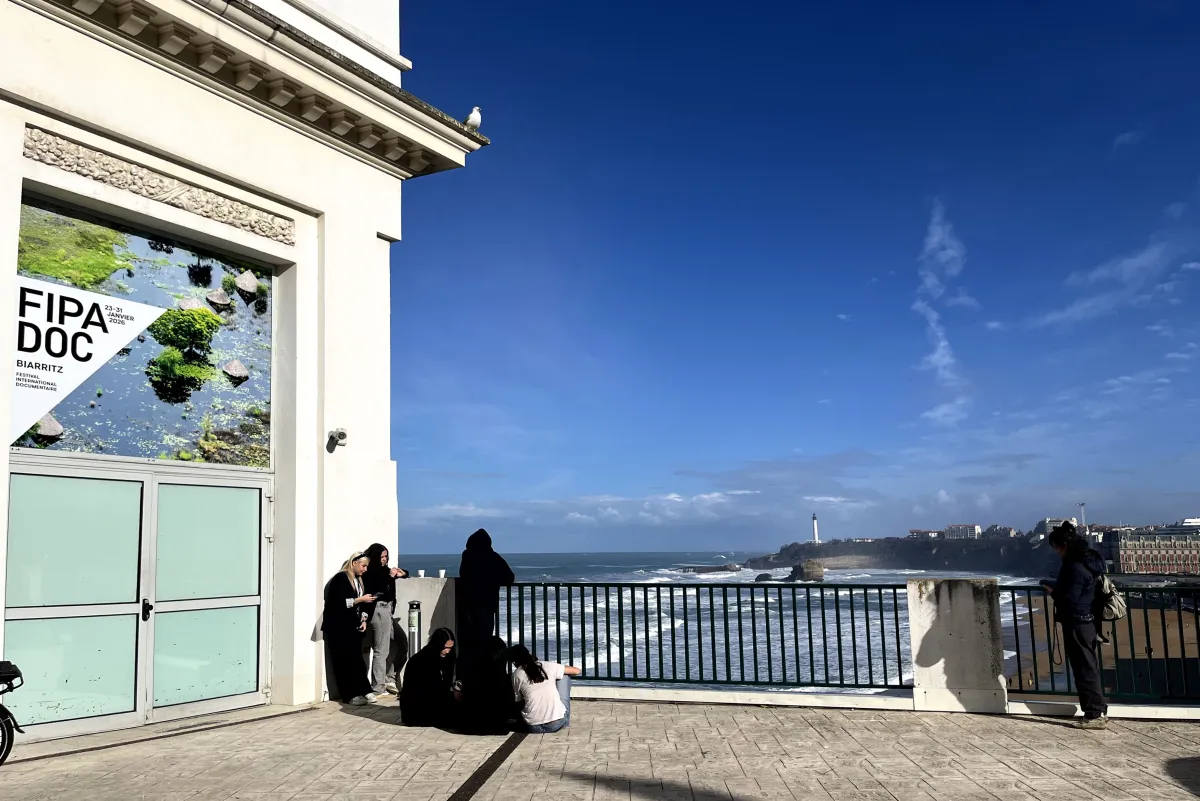
Biarritz is a seaside city near the French–Spanish border, accessible by a short flight or a longer train ride from Paris. I landed late at night and missed the festival’s opening ceremony. Still, the moment I stepped out of the airport, I was welcomed by the fresh coastal air. The city felt calm and quiet, the kind of stillness you expect from a tourist town in the off-season.
My Uber driver spoke fluent English and asked if I was in town for FIPADOC. I hadn’t realized how visible the festival was locally. He told me the event has grown significantly in recent years and draws professionals from across France and Europe.
My scheduled industry meetings wouldn’t start until Wednesday, so I decided to use the weekend to settle in and watch films.
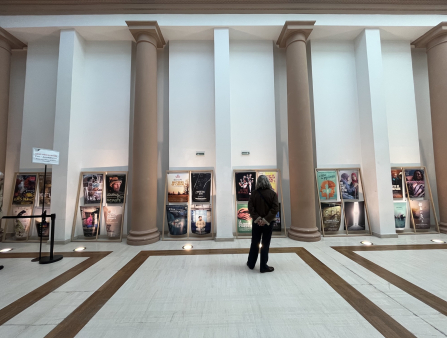
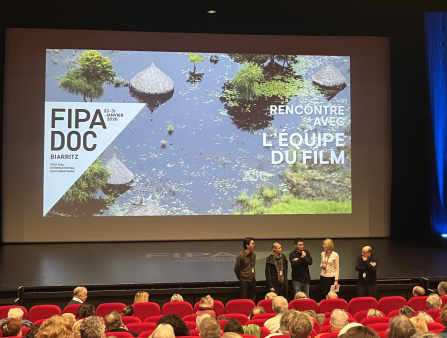
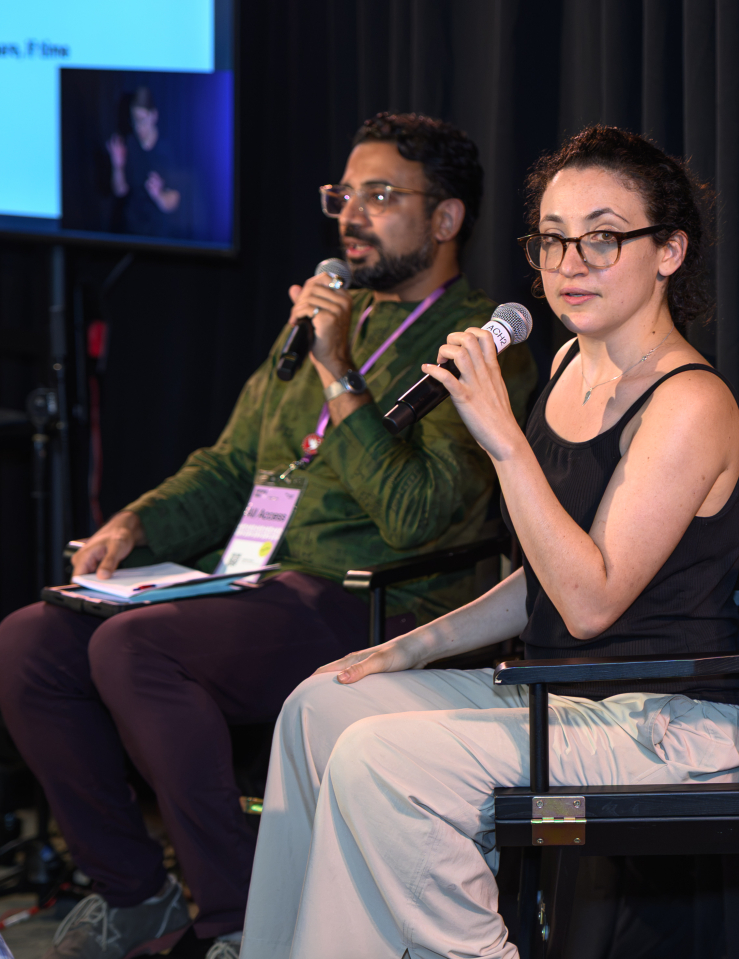
Q&A after Dancing With the Gods.
Saturday, January 24: Watching and Wandering
The forecast predicted rain all week, so I kept my expectations low. The morning, however, was dry. I walked through downtown Biarritz before my first screening at 10:15 a.m. The city felt almost suspended in time: rows of hotels, semi-tropical greenery even in winter, restaurants either closed or just waking up for the day. I saw a few locals carrying their trash to public bins.
The first film I saw was The Queen and the Smokehouse, directed by a young Polish filmmaker. It’s part of the European Stories competition, and FIPADOC marked its international premiere. Though my viewing choices throughout the festival were shaped largely by logistics, as I booked screenings only shortly before arriving, and many popular ones, especially in the New Talent section, were already sold out, The Queen is exactly the kind of film that would be difficult to view elsewhere.
The film is a character-driven portrait of a woman who has run a landmark smokehouse in an amusement park for decades. When her health declines, her priorities in life begin to shift. The story has a clear narrative arc and is visually polished. While the protagonist’s transformation felt somewhat expected, the director showed a strong eye for detail; small moments—like the protagonist storing cash in a teapot—stayed with me.
The Q&A was conducted in French, which limited my understanding, but luckily, the director spoke English. I noticed that the audience questions focused primarily on the protagonist rather than the filmmaking process. The crowd felt largely non-industry, yet deeply engaged, curious, and emotionally invested.
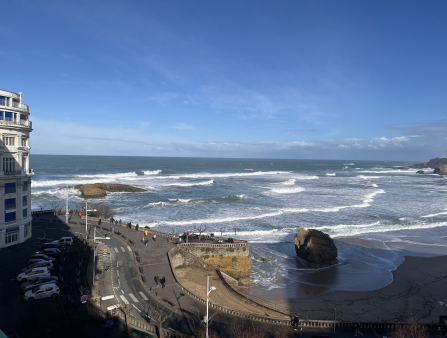
Later in the day, the sun came out. Standing by the coast and watching the waves crash in, I understood why Biarritz is considered a surfer’s paradise. There were plenty of surf shops and hip cafés, though there were fewer young people around. Perhaps because it was winter, the off-season.
In the afternoon, I watched The Undergrowth (La Hojarasca, dir. Macu Machín), which had screened at Berlinale Forum in 2025 and is part of the Spain & Portugal Focus section. The film follows three sisters who reunite on a volcanic island, where a discussion of inheritance reopens old tensions and memories. It became my favorite film of the trip. Patient and restrained, the film unfolds like a fable, with remarkable emotional depth and imagery reminiscent of 19th-century rural naturalism paintings.
I ended the day walking aimlessly and doing prep for the industry meetings ahead. On my way out of the venue, a rainbow appeared over the sea. What a small, unexpected gift.
Sunday, January 25: More Films and the Local Food Market
Despite the rainy forecast, the morning brought more sunlight. I attended a 10 a.m. screening of Lamb of God (dir. Massimiliano Camaiti). Even early on a Sunday, the theater was nearly full. The film follows the annual tradition at Rome’s Santa Cecilia Monastery, where two newborn lambs are blessed and raised by a cloistered nun until their wool is woven into the Pope’s pallium. The film is part of the International Competition and later won the Michel Mitrani Discovery Award.
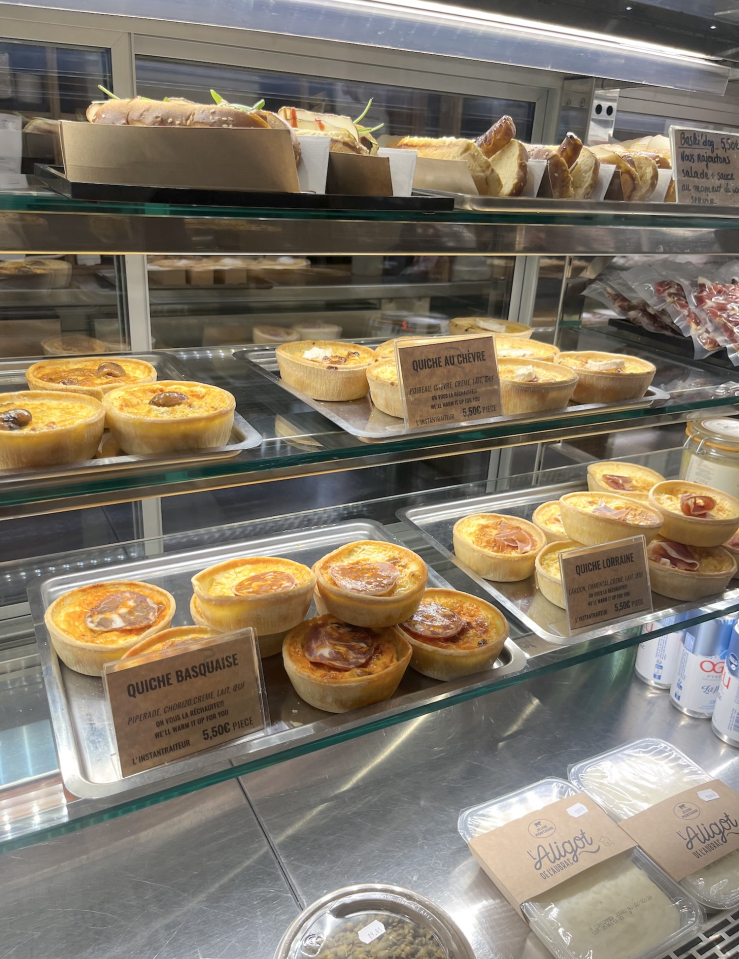
For lunch, I wandered into the local market and happily got lost. I sampled a quiche and a small pigeon. Both were delicious. The market was vibrant, filled with fresh vegetables, cured meats, seafood, and ready-to-eat dishes. It’s absolutely worth visiting if you’re in town.
In the evening, I watched Sisters (dir. Julia Zahar), a French documentary that is part of the French Speaking Documentaries Panorama section. The film adopts an intimate, first-person visual language, closely embedded in everyday life, as the filmmaker follows her younger sister’s struggle with severe depression over four years, exploring their bond and the journey toward healing.
Watching these films—many of them major festival premieres—gave me a clearer sense of what festivals, broadcasters, and the broader documentary landscape are currently responding to. They were diverse in style, ranging from classical character-driven narratives to more restrained, observational works. Spending these extra days in the cinema became an important part of my research process. It allowed me to step outside the immediate pressures of pitching and reflect on the form and tone of our own film.
By nightfall, the weather turned harsh with strong winds and heavy rain, but I felt excited for the industry days ahead.
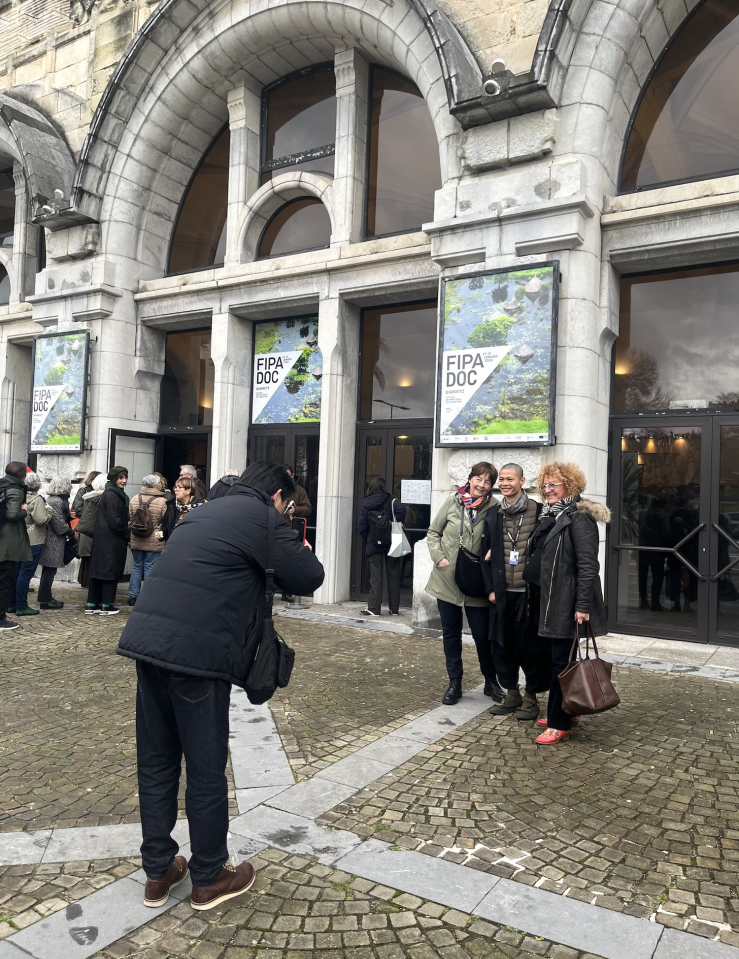
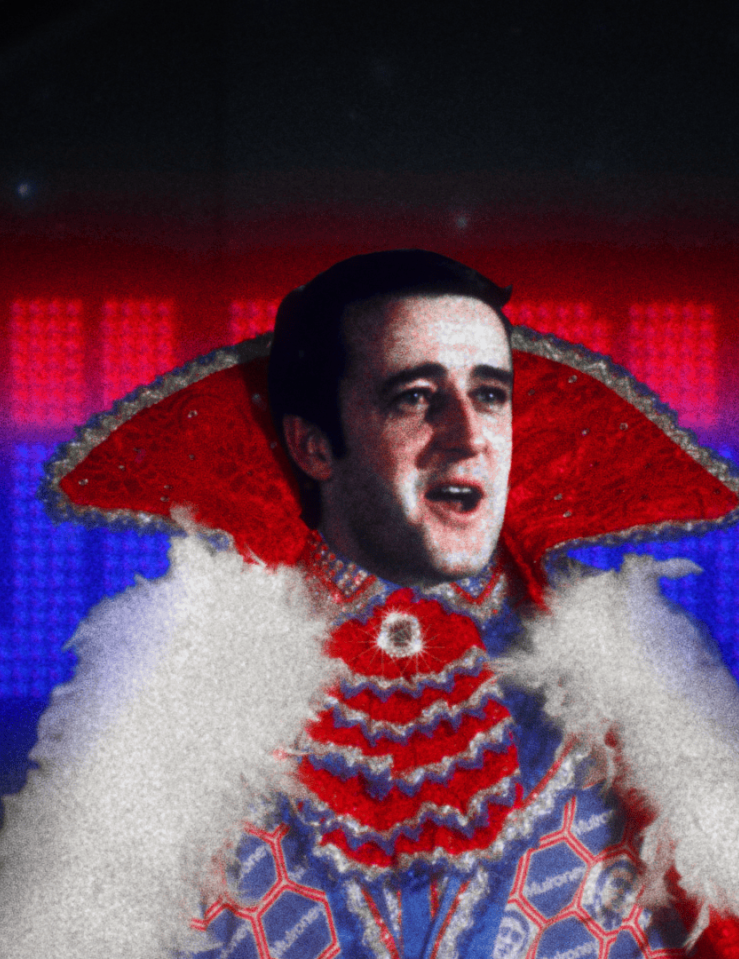
Ying, the protagonist of Dancing With the Gods, takes a photo with audience members.
Monday, January 26: Industry Events Start
Even before arriving, it was clear that FIPADOC is a deeply French festival. A large portion—perhaps more than half—of the industry events are conducted in French. At the same time, the film selection maintains a balance between French, European, and other international titles.
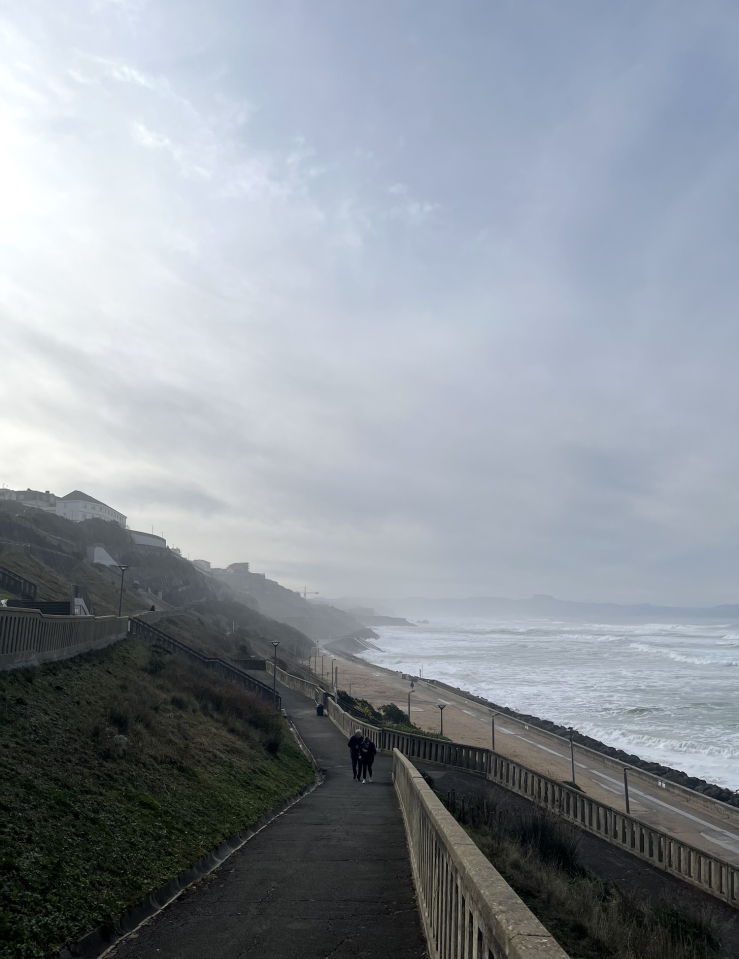
Industry events officially began on Monday, but I chose to focus on pitch preparation instead of attending panels. That morning, I rehearsed the Queens Ballroom pitch with Clara, our French co-producer, on a hill overlooking the sea. What a surreal and memorable setting.
Clara has attended FIPADOC more than fifteen times. She shared some context: the festival once included fiction but is now exclusively documentary-focused. It serves as a key documentary industry platform in France and across Europe.
Over lunch, I met with Ove Rishøj Jensen, one of the organizers of the pitch and forum. He explained that he joined three years ago to make the forum more international. His philosophy is that a healthy pitching lineup should reflect the diversity of the market, including both “big” projects that excite broadcasters—such as this year’s Hitler’s Eyes (dir. Dror Moreh) or Frozen War (dir. Dirk van den Berg and Pascal Verroust)—and “smaller” and more intimate films. The distinction between “big” and “small,” he noted, often comes down to perceived market value rather than artistic ambition.
Ove also mentioned that European broadcasters are traveling less due to concerns about carbon footprint, making in-person meetings harder to secure. The fact that FIPADOC overlaps with Sundance adds another layer of challenge. Still, he expressed optimism about the forum’s direction.
In the evening, the daily industry happy hour began at 6:30 p.m., followed by a karaoke party with a young, lively crowd.
Tuesday, January 27: Final Prep
I met a director friend from China, Luyao Zhang, whose film Dancing with the Gods screened in the Musical Documentary section. The film follows Ying, the son of a fisherman who devotes himself to contemporary dance. As his artistic growth reaches a bottleneck—set against financial hardship in Beijing and a pandemic that halted his company’s international tours—he returns to his hometown in search of spiritual and artistic renewal. With the help of his family and fellow villagers, he orchestrates a dramatic dance performance in his hometown, inspired by the gods he grew up worshipping.
Although the story is set in a small town in China, it resonated strongly with the local audience. The screening played to a full theater, which surprised me given that the film wasn’t heavily promoted in the festival catalog. It ended with a long standing ovation. Many people were in tears by the end of the film, myself included. Ying himself traveled from China to Biarritz for the screening, along with the film’s cinematographer, Wu Kang. Neither spoke English, but both were deeply moved by the audience’s warm response.
I had worked with Luyao in Beijing several years ago and was happy to reunite unexpectedly in Biarritz. We caught up on life and on the changes unfolding in the Chinese film industry. After spending several days wandering the city as one of the few—if not the only—Asian faces around, the encounter brought me a sense of warmth and familiarity from home.
The rest of the day was devoted to final pitch preparation.
Wednesday, January 28: Meetings
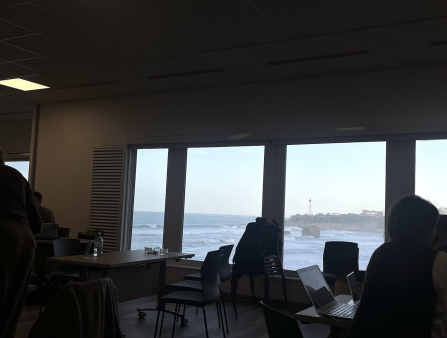
I started the day with a long walk along the sea. The waves were magnificent. Moments like this remind me how lucky we are. As documentary filmmakers, the work takes us to places like this that we might never otherwise visit.
We had eight or nine meetings in the afternoon from 3 p.m. to 6 p.m. They were fast and intense: twenty minutes each session. Because we were pitching the following day, most people hadn’t seen any materials, so each meeting involved both introducing the project and gauging interest. Luckily, I’m fairly familiar with this format; I’d had similar experiences pitching at IDFA Forum in 2017 and 2022.
The meetings were fruitful, even without immediate commitments. We spoke with broadcasters and distributors from Germany, Belgium, the Netherlands, and Finland, among others. Most loved the cheerfulness of our project and the universal themes it touches on. Some expressed uncertainty about how a film centered on Asian American immigrants in the U.S. might resonate with their local audiences.
We also met with a few distributors focused on theatrical releases within specific European territories, which genuinely excited me. Even as theatrical distribution becomes increasingly difficult, it was encouraging to meet companies still committed to cinema screenings.
Dinner was with Clara, her colleagues, and several filmmakers and other industry connections. We shared seafood, local ham, and lively conversations. In a hard time like this, it felt good to be reminded of the solidarity within the industry, the nice and enthusiastic people we work with. I skipped the dance party afterward, choosing to rest ahead of the pitch. But I woke up to a video from my friend Luyao, who clearly had a lot of fun at the party and danced til 2 a.m.
Thursday, January 29: Pitch Day
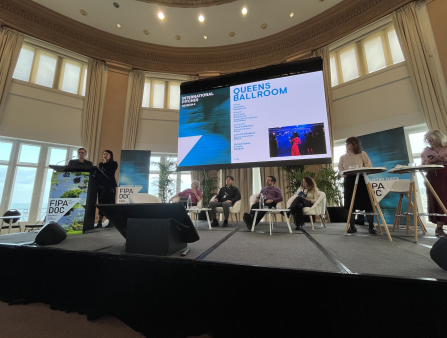
We were the last project to pitch, which was a bit nerve-racking, but by that point, we also felt well-rehearsed. The audience was warm and supportive, and it was reassuring to see familiar faces on the panel, including several decision-makers we had met the day before. The questions were thoughtful and encouraging; one comment from POV’s Robert Chang, about the role of “time” in our narrative, stood out to me as especially insightful, not only for the pitch, but also valuable for our creative explorations moving forward. We were also inspired by the other pitch teams, whose projects demonstrated a wide range of approaches, voices, and ambitions.
More meetings followed in the afternoon. Several people noted that projects like ours are exciting precisely because they resist easy categorization. It’s the kind of highly original film that can resonate deeply with audiences in unexpected ways. These conversations reinforced a growing conviction of mine: for work like this, filmmakers need to play an active role in shaping audience and distribution strategies. Rather than relying solely on precedent, we see this as an opportunity to think creatively about how the film meets its viewers and builds its own pathway.
At the pitch awards ceremony in the evening, Queens Ballroom received the DocsBarcelona Award, meaning the project will continue its journey and be pitched again in Barcelona. Before that, we will also pitch at the CPH:DOX Forum in March.
After four years in development, we’re hopeful that 2026 will be the year we carry the film decisively toward completion.
Reflections
My overall impression of FIPADOC is that it’s a valuable entry point into the French documentary landscape and a strong space to encounter a wide range of French and European films, including emerging voices.
Through my experience at FIPADOC and working with a French co-producer, I came to better understand the extent and structure of the French documentary ecosystem. I was struck by how the French funding system operates as an interconnected framework: relationships with broadcasters such as France Télévisions can open pathways to additional support, including CNC funding. Overall, the system feels designed to support a film through multiple financing stages, offering a sense of continuity in the production process.