

When it comes to spending money to stand in a room full of financiers, documentarians have a lot of feelings and very different math. Documentary’s Market Notes puts working filmmakers in the writer’s seat to find out why. Each guest column follows one filmmaker’s participation from preparation through reflection—disclosing expenses, goals, and meetings—to give readers the granular, first-person account of market life that trade coverage rarely provides.
After spending a few years producing and coproducing feature and short documentaries, I finally gathered the nerve to dive into a story that’s deeply personal, embarking on my first feature doc as a director. The film, tentatively titled Somewhere Over the Rainbow, is a tricky one to place into categories: it’s a story about chosen and inherited families, using humor to meander through wider themes of colonial history, trauma, and acceptance.
I started working on the film in early 2024. I met Riham Ezzaldeen (Syria/USA) at Hot Docs 2023, where I was accompanying Against the Tide, my previous film as producer. Riham and I connected over shared past stories and values, and she came on-board as a producer in 2024. The project was selected for the Circle Accelerator Lab for Women in 2024 which helped me reflect critically on my creative approach with inputs from peers and mentors. In 2025, we were one of the top 5 finalists for the Whickers Award, and I was invited to pitch the film at Sheffield DocFest. We won the runner up prize, a development cash grant of GBP20,000.
In mid-2025, we finalized a co-production deal with French producer Dominique Barneaud (Bellota Films), and started exploring national as well as regional financing in France.
Why We Decided to Go
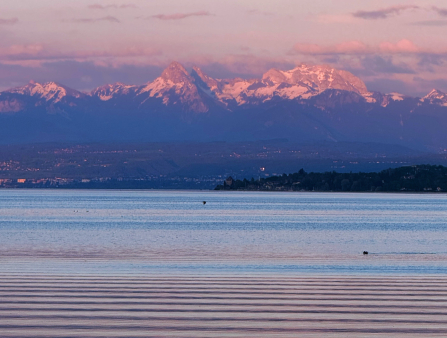
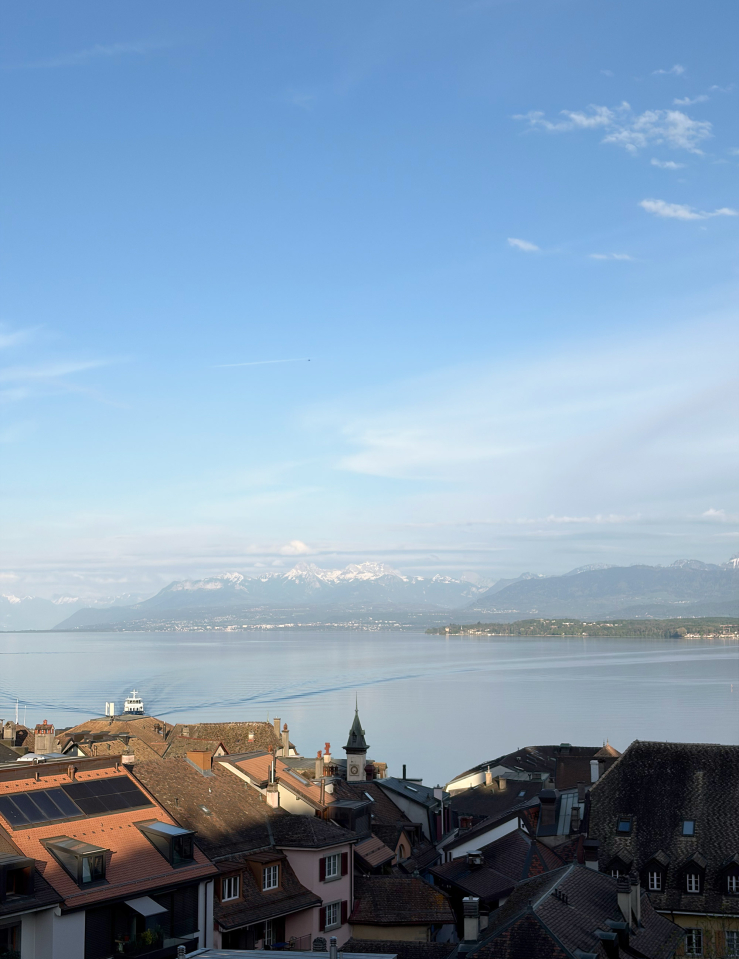
Visions du Réel (April 17–26, 2026) is a special festival and market. I first attended it to present Against the Tide in 2023, as part of their WIP Showcase, and instantly fell in love with its vibes. The festival, and consequently the Industry section, have a clear bent toward creative, author-driven films. Both the festival and industry events are intimate: there’s a strong presence of industry professionals from across Europe and the rest of the world, but the setting is intimate. It rewards patience—events are spread across the town of Nyon, Switzerland, and the week, with enough breathing room to have actual conversations rather than elevator pitches. The view of the snow-clad Alps is always a bonus.
In mid-December 2025, we applied for the 2026 VdR–Pitching to connect with potential broadcasters to trigger France’s CNC funding, as well as additional European co-producers. (Unless applying for Cinema du Monde, it is necessary to secure a broadcast partner to get funding from CNC.) This stipulation made our goals clear for VdR: get the project in front of commissioning editors from French and European broadcasters, and try to get minority coproducers from the region. We got a shortlist update in early January and got a final selection confirmation email in the first week of March.
The participation fee of 360 CHF covered two VdR–Industry accreditations and all the pitch activities, and the festival unfortunately doesn’t cover any travel or accommodation costs. We had to dip into a significant part of our development funding to secure visas, flights, train, and hotel bookings to bring three team members for this pitch: attendance at VdR–Industry can set you back anywhere between 5000–10000 Euros, depending on where you are flying from and how many team members attend.
While it’s a fantastic opportunity for a film team, the cost is substantive and only possible if you have secured some kind of funding. Even then, it really does depend on your project’s stage and needs. I’ve always followed the rule of pitching only once per stage of a project, unless a potential pitch can open up a new market that significantly opens up fundraising potential.
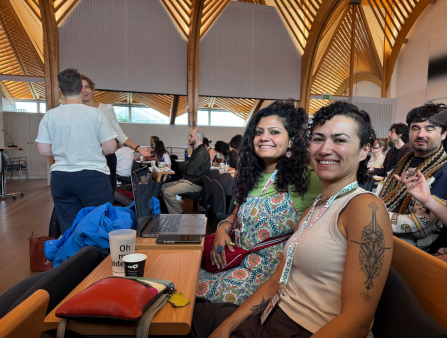
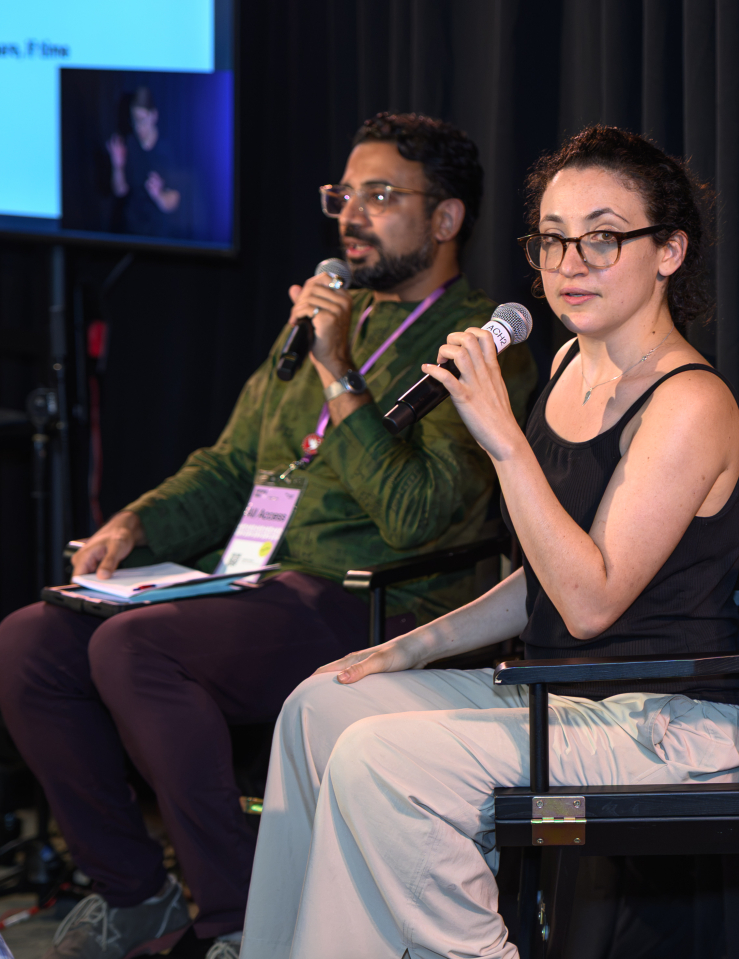
The author (L) and producer Riham Ezzaldeen (R) seated at the pitch rehearsal.
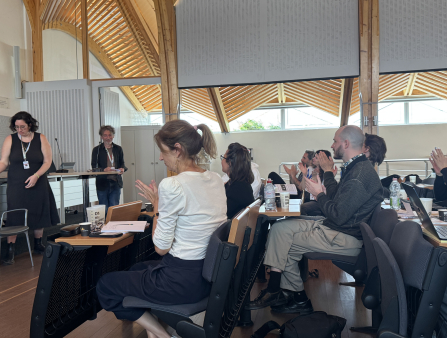
Online Prep and Pitch Structure
The VdR Industry team is quite hands-on and helpful in the lead up to the festival. We had an introductory virtual meeting with Sabine Fayoux Cantillo (Head of Industry) and Noor Daldoul (Industry Manager). They talked us through the format: the pitch itself is a 12 minute slot for each project, which includes the spoken presentation, a visual sample, and a brief Q&A briefed in advance with the pitch moderator. This is then followed by a series of five roundtable sessions of 20 minutes each, where each pitch team is seated at a table with multiple decision makers to go into detail about the project and ask whatever questions they need to ask. The one-on-one meetings are scheduled over a subsequent two days, with more industry guests.
In this prep call, Sabine and Noor also informed us that we would be getting a couple of online sessions with a pitch trainer. The following week, we were introduced to the pitch trainer assigned to us: Madeline Robert. I had met Madeline previously at VdR in 2022, when she was the festival’s Head of Industry. She scheduled two sessions with us to help us prepare for our time in Nyon. One of these was focused on the written materials for the catalogue, and Madeline went into great detail with her feedback, helping to focus the synopsis and treatment in a way that works for the European market. The second session with her was to discuss the visual sample and the pitch script. I really appreciated Madeline’s insights through these sessions, as she was direct, honest and very encouraging while pointing out the elements she didn’t feel worked well for the VDR industry audience.
In addition to these sessions, Madeline was quite responsive on email ahead of the submission dates for all materials, and was able to leave her notes, comments and suggestions promptly. I found it particularly amusing when Madeline noted that I needed to make the language more accessible for non-native English speakers and readers. There are some artifacts of a post-colonial existence that one can’t avoid, and my use of extremely convoluted English is possibly one of them. Luckily, this is also one of the subjects of my film! We managed to submit our written catalogue materials and a visual sample in time, and the Industry team was quite proactive through the process, letting us know whenever there were errors, typos, or technical glitches in the submissions.
Saturday, April 18: Arrival
Nyon is a beautiful little town by Lake Geneva (also known as Lac Lèman), overlooking the Alps. It’s a 15–20 minute train ride from Geneva. I flew in from Goa to Paris, via Delhi, and then took a train to Geneva. Since I was traveling with both my producers and the hotel VdR had booked for us is a little far from the festival, we decided to rent a car that Dominique (French producer) drove.
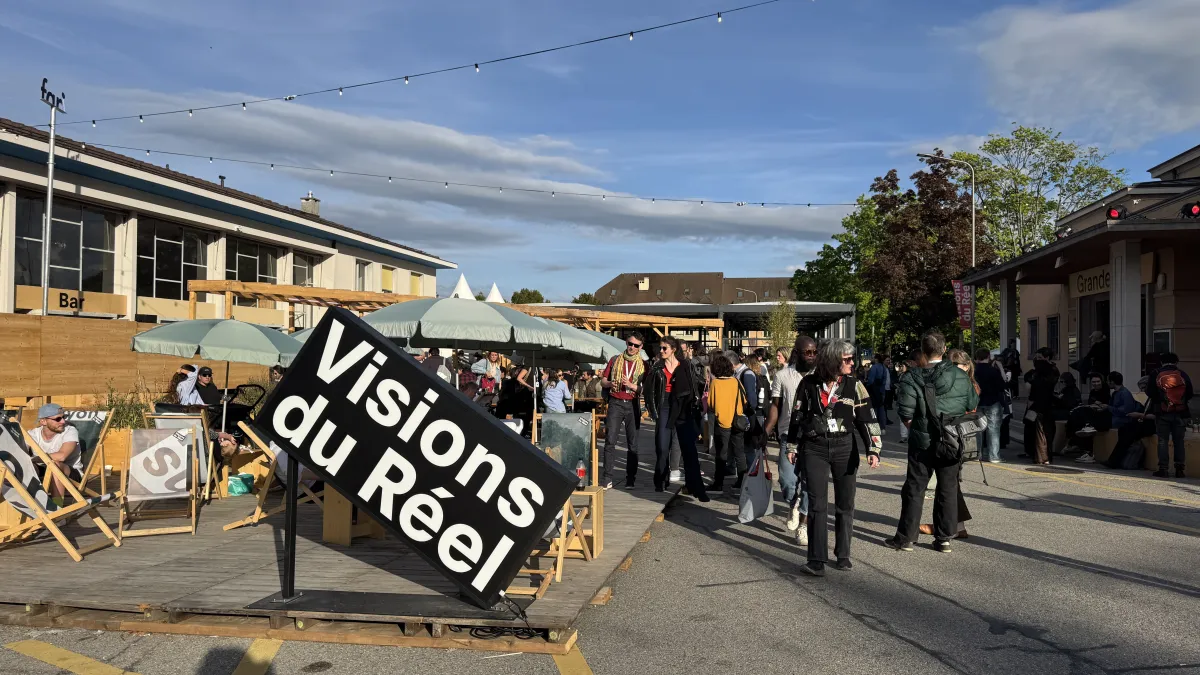
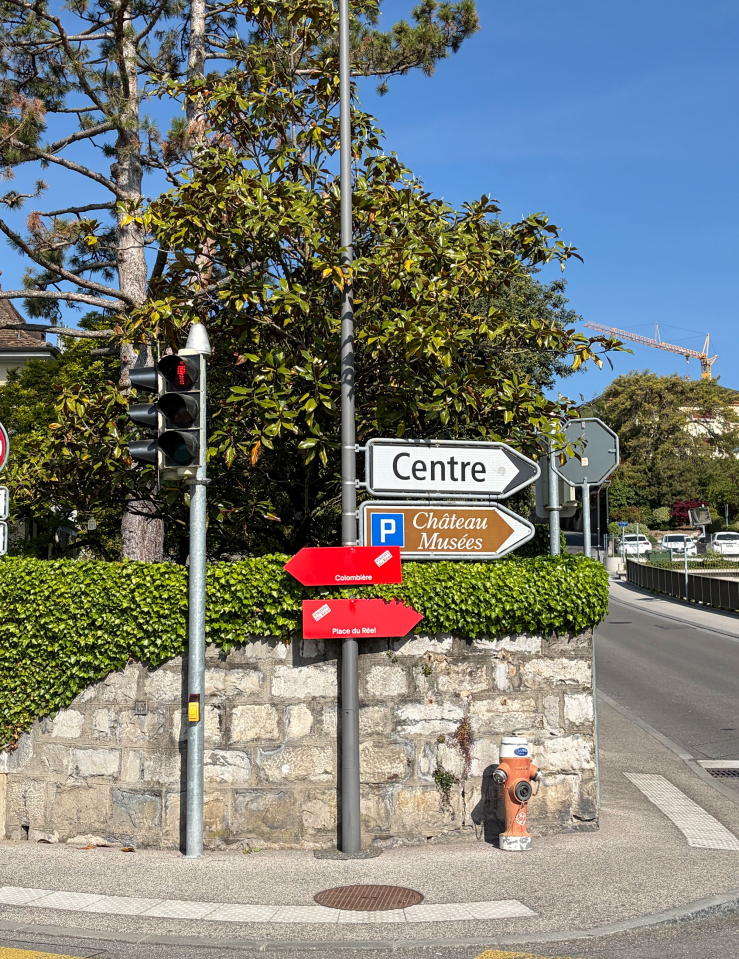
We arrived in Geneva late afternoon on Saturday, dropped off our bags at the hotel (Yotel Geneva Lake, 15 minutes drive from Nyon) and headed to the accreditation desk to collect our badges and check out the festival. The accreditation desk is located in Place du Reel, which functions as the primary center of the festival. There are a couple of bars, some food trucks and a lot of seating arrangements, where festival and industry participants gather between events to socialise, get some down time or have informal meetings.
We collected our badges and decided to catch one of our friends’ films that was being screened that evening—To Hold A Mountain (dirs. Biljana Tutorov and Petar Glomazić, an IDA Enterprise grantee). It was extra special to watch the film, because Biljana is the founder of Circle Accelerator, which has supported my film’s journey since early development. To Hold A Mountain is a stunning cinematic portrait of two women in Montenegro’s mountains and their relationship with the land that’s under imminent threat. It was shot over several years, and is a beautiful, immersive film that deserves to be seen on the large screen. The Q&A included both directors as well as the two protagonists of the film, and a long standing ovation after the film showed how deeply the film resonates with audiences all over.
Afterward, we all headed out together to go get dinner. Unfortunately, restaurants in Nyon shut early, and our options were limited. After looking around and trying to find an affordable, decent place, we ended up at a small tapas place that served small plates and wine. We headed back to our hotel at a decent hour to prep for the pitch rehearsals the next day.
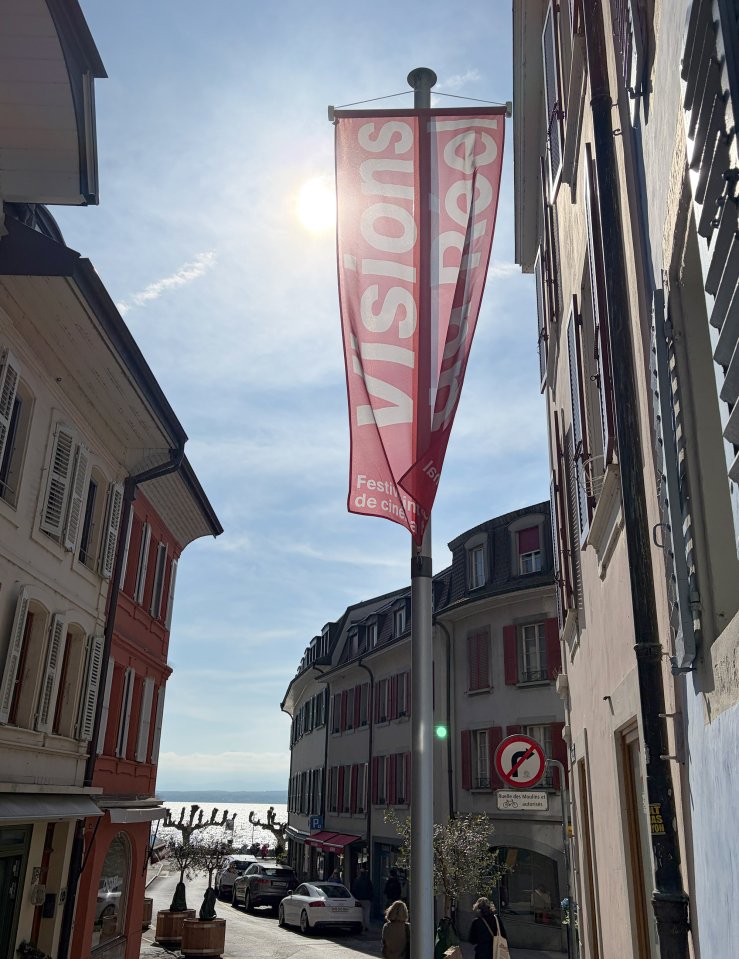
Sunday, April 19: Pitch Training
The pitch training is quite a unique part of the VdR–Industry forum. We were asked to arrive at the Pitching venue, where Sabine and Noor showed us the auditorium where the pitches would take place. We were then escorted to the pitch training venue, a large conference hall booked for the day for all the projects to practice their pitches, get feedback from the pitch trainers (Madeline Robert and Violeta Bava), the pitch moderator (Elise McCave) and from other project teams. We spent the entire day from 10:30 a.m. through 4:30 p.m. in the pitch training, watching each other pitch and present our samples. This is quite unusual, and to be honest, it helped take the edge off.
I generally find it a bit strange that projects at industry events are kept apart, and we rarely get a chance to watch each other’s presentations. Usually, on the day of pitching, most teams are busy rehearsing and fighting off nerves. Here, this informal rehearsal allowed us all to be together for an entire day, get acquainted with each other and know the projects so we felt less like competitors and more like a bunch of filmmakers trying to “get it right.” By the end of the day, we all knew each other quite well, and started to talk to each other about our journeys and challenges, which in my mind, is quite an unusually welcome vibe. Elise McCave (Executive Director, Points North Institute) did a great job as a pitch moderator, watching each project team rehearse, timing every one of us, and trying to help frame the right introduction and question to ask at the end of the presentation. Elise is witty as hell, and knows how to ease people in a situation when they’re mostly all nerves, and miraculously ushered us through the day and ended things well in time for us to catch the first social drinks and the opening night for VdR-Industry.
Every evening, Magic Hour is a drinks gathering at 6:30 p.m. near the Place du Réel, and usually acts as a great setup for casual networking and chitchat with other filmmakers. We grabbed a glass of wine and used the first Magic Hour to talk to the other Pitching teams, our newly minted comrades-in-stress. At 8:00 p.m., everyone was urged to walk 10 minutes away to the opening night soiree at the Chateau du Nyon, a 12th-century castle perched on the lake, with a stunning view of Mont Blanc and surrounding Alpine mountains. The Opening Night party was scheduled just in time to catch a gentle pink sun setting over the snowy peaks. The rest of the evening went by in a blur of wine and fondue, with a bunch of international participants trying to work out the best way to ingest liquid cheese with only a thin stick as cutlery.
Monday, April 20: Pitch Day
I spent the morning rehearsing with my producers and soaking up the sun. The weather, it must be noted, was spectacular throughout the week in Nyon, with the sun out every day and the temperatures ranging between 12–25 degrees Celsius. Coming from 38 degrees Celsius with 90% humidity in Goa, I was more than happy to spend as much time as humanly possible outdoors. My producers and I made our way to the Industry lunch, which was a hummus bowl (the falafel was a travesty, per my producer), but we didn’t have the stomach for much food right before the pitch. We paced around the lunch spot doing some last minute practice and made our way to the auditorium for the pitch.
We were scheduled to go on stage in the middle of the post-lunch block, so there was nothing to do but relax, watch other pitches and brace for our time in the spotlight. Our pitch went well. The rehearsal the previous helped me feel more confident, more attuned to the other filmmakers pitching, who were all seated in the front few rows, and we all had a well-established rapport by then. Elise kept the audience engaged and responsive, and the audience/industry reaction to our pitch was quite warm.
Immediately after our pitch, we were ushered to the Roundtables, which went by in a very hazy blur, and then we had three jury panels to present before: the Eurimages Jury, the Visions sud Est Jury and the Industry Jury. The Roundtables felt quite intense, with the same questions being asked on each table. By the fourth and fifth tables, we could sense energy flagging from the decision makers as well as the film teams. I really don’t know how we ploughed on through the three panel sessions with the juries, because my brain had stopped working a few hours before they happened. This was the only negative in an otherwise brilliant Industry schedule: to have a pitch on the same day and follow it up with eight roundtable sessions back-to-back feels quite a marathon, and not one I would want to revisit. I was essentially pitching on repeat from 2:30 pm til 8:00 pm that day.
After, I walked limply to a beautiful beach restaurant for French Docs Drinks hosted by Unifrance, EURODOC, and the Swiss Embassy. I honestly can’t recall if we had dinner that day or not, and I have a vague memory of coming back to the hotel and passing out from sheer exhaustion.
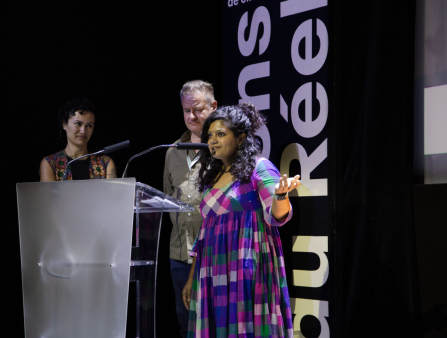
(R to L) Riham Ezzaldeen, Dominique Barneaud, and Koval Bhatia pitching.
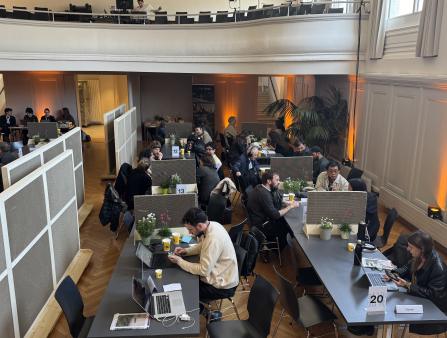
1:1 meetings.
Tuesday, April 21: 1:1 Meetings Begin
Luckily, our meetings began after lunch, as the industry guests were all present for the last morning block of pitches. We headed over to the Grand Colombiere, the hub for all the industry meetings, and got a cold lunch. I felt the need for some warmth especially after a gruelling day, and went to get pho from the little Vietnamese takeaway down the street. The pho was decent-ish and cost 18 Swiss francs, which is quite cheap for Nyon. More importantly, it was hot and with the frankly unholy amount of hot sauce I added, all my spice cravings were sated. I found a little spot near the lake and enjoyed my sinus-clearing broth alone in the sun, trying to mentally brace for the meetings to come.
After lunch, I joined my producers back at the Industry hub, and we sat down at our assigned table for the 1:1s. We had twelve meetings between 2 p.m. and 6:30 p.m., at an average of 20 minutes each.
The meetings were a mixed bag; there were some very good meetings with potential co-producers, while some of the Swiss industry folk were not sure if our film had a significant market in their region. We also met fund representatives, programmers, and publishers, which doesn’t always pay off immediately, but I know that these connections in a film’s early journey really matter in the long run. In general, all the people we met had positive remarks on the pitch, and asked questions that were framed respectfully and led to productive conversations. We did make a strong connection with the reps from Screen Scotland, who generously took us through the funding process that they manage. We also had some meetings with producers from the UK/Scotland, a region that feels like a really organic fit for my film.
To honor the successful evening meetings, I opened up a bottle of single malt scotch that Riham had brought along to Nyon (it’s part of our production deal: director will be supplied with a bottle of scotch ahead of all and any pitches). I spent some time catching up with old friends that I hadn’t met in a while: Milton Guillen, who was in my cohort of IDA’s inaugural Getting Real Fellowship and here presenting the film My Skin and I with his co-director Fiona Guy Hall at VdR–Works in Progress.
That evening, there was again a nice soiree at the lake beach, sponsored by SRG SSR and Arte. It was clear that all of us were exhausted, because hardly anyone talked shop, and most of us were looking to wind up early.
Wednesday, April 22: Awards Day
The last day of Industry activities came up quite quickly, and the day was packed again. I had to quickly check out of the hotel at 8:00 a.m. in order to catch the first meeting slot of the day. I arrived just in time to kickstart the first of the day’s nine meetings, which went on from 9:00 a.m. through 3:30 p.m. Once again, the meetings were quite an eclectic mix, with more facetime with European broadcasters and sales agents, which fit our intended goals for VdR. Robert Chang from POV remains one of my favourite people to meet at an industry event slash festival, because he always has genuinely insightful, incisive feedback to offer and does so in his characteristic gentle way.
I caught up with a couple of producers who had presented their pitches alongside mine, to get a sense of how their time at VdR was going. Gema Juárez Allen (Gema Films), who had pitched the film La Linda with director Francina Carbonell, told me she was pitching for the fourth time at VdR-Industry. She keeps coming back here because the market fits with the kind of cinema she likes to make: creative, author-driven, and even a little experimental. That, and the fabulous view, of course. She pointed out how great it was that one can have a relaxed conversation with a commissioning editor or a major funder quite easily at VdR, which is impossible at a bigger, more packed festival like IDFA or CPH:DOX.
Maya E. Rudolph (Louverture Films), pitching her film The Vortex of Extinction with the director Ljubomir Stefanov (Honeyland), told me that this was her first time at VdR, and while it was quite expensive to get here, it felt like quite the fairytale, with some great meetings and access to the European funding ecosystem that can be difficult from her home base across the pond. She and I both agreed that the unique rehearsal alongside other projects a day before the pitches started really helped iron out any weird or competitive vibes among all the teams.
As the day went on, there was a hushed buzz about the awards ceremony scheduled for late evening, but we braved through our last set of one-on-one’s without thinking too much about that.
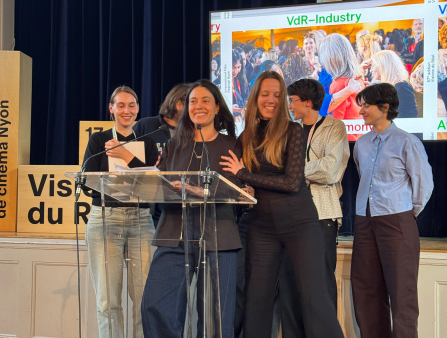
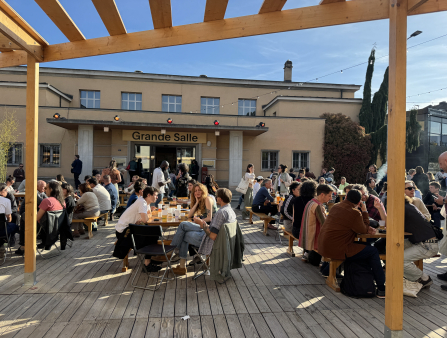
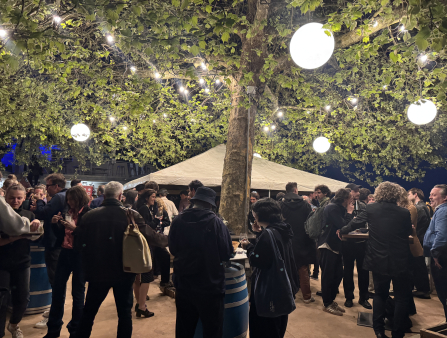
The awards ceremony finally happened. Somewhere Over the Rainbow won two awards: the DAE award and the AIDC award, which means we will be pitching the film next spring in Melbourne! My producers and I decided to celebrate the awards by getting some drinks at the Place du Reel, and there was a general celebratory mood.
Reflections
I left VdR with a similar impression I got during my first visit—it’s a really great avenue to explore the European funding landscape, and allows you to do so in a more leisurely way than other similar markets in the region. Since EU film financing is strongly linked to broadcast funding, you should be prepared to meet several commissioning editors and sales agents who specialise in TV, which can be a departure from industry events outside Europe.
As a filmmaker, I am glad to come away with a strong understanding of how the film is landing with decisionmakers. This helps inform our future strategies for financing, as well as figuring out which aspects of the film we need to develop on priority before approaching the broadcasters and regional funders. We plan to follow up with Screen Scotland and the producers that they introduced us to, in order to further explore a co-production. We also had some great meetings with UK-based networks which we plan to pursue in the coming year.
We attended VdR–Industry at a pretty good stage—before heading into production. I would advise anyone considering this for the first time to apply when they have some development funds in place, and have strong visual materials to showcase, since the pitch is quite intensive and competitive. I was able to make the most of this trip, because I had a short filming schedule remaining in France, and clubbed it with VdR to save on flights and visa costs.
I’ll be filming Somewhere Over the Rainbow this year, and hope to be in a reasonably progressed stage by the time we go to Melbourne next spring for AIDC, which would be instrumental in exploring more avenues to infuse funds into the film. I would love to return to VdR with my finished film, and once again gaze upon snowy mountains whilst I battle liquid hot cheese.