

A filmmaker and executive producer with a more than two-decade career, Mandy Chang has witnessed and navigated all of this millennium’s transition and turbulence in the field of nonfiction filmmaking. Her formative career brought her to the UK from Australia to work as a director, focusing on broadcast arts slot commissions, including the cultural series Hello Culture presented by Matthew Collings for the UK broadcaster Channel 4, which nurtured my own televisual radicalization as a teenage art student. Chang was recently appointed the first chief executive officer of the Documentary Film Council (DFC), the UK’s burgeoning independent, democratic, and national membership organization for documentary film.
The premise of her breakout 2008 feature documentary, The Mona Lisa Curse, is not distant from Chang’s current role: evaluating the constructed values and commercial pretenses of influence, commodification, and power that form a peculiar artistic ecosystem. Moving from commissioned to commissioner, she spent over four years at ABC (Australian Broadcasting Corporation) as head of arts and acting head of nonscripted television before becoming commissioning editor at the highly regarded BBC Storyville feature documentary strand. From 2017 to 2021 she worked on such reputed titles for Storyville as One Child Nation (dirs. Nanfu Wang and Jialing Zhang, 2019), Cold Case Hammarskjöld (dir. Mads Brügger, 2019), Welcome to Chechnya (dir. David France, 2020), The Mole Agent (dir. Maite Alberdi, 2020), and Writing With Fire (dirs. Sushmit Ghosh and Rintu Thomas, 2021).
In 2021, she took on the role of global head of docs at Fremantle, a large company that claims to produce 11,000 hours of new content and 600 formats, series, and films each year. Two and a half years later, she transitioned into leading Undeniable, a label developing a slate of feature documentaries and series. These movements, from independent filmmaking, to arts and feature documentary commissioning and acquisitions on either side of the world, to head of documentary at a commercial production house, have allowed Chang to build a cubist perspective on the nonfiction film field, seeing the ecosystem from all angles—how it mirrors, abuts, integrates, contrasts, and fractures in one image we call documentary.
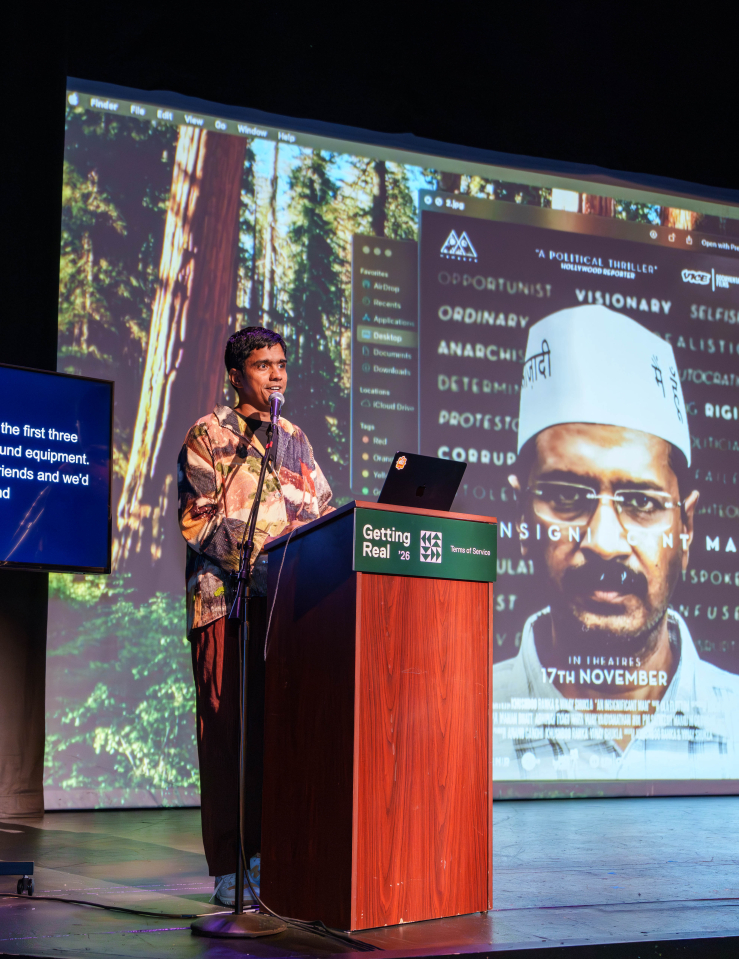
Having directed, produced, or executive produced over 100 works across film, TV, and radio, Chang shows a continued commitment to documentary not as factual content but as an art form that can thrive in independent and broad commercial contexts. This career backdrop is what has primed her to deliver a Getting Real ’26 keynote on the meaning of service. Our conversation comes only a short time after she takes the reins at DFC, offering a moment to discuss her sense of the purpose of moving beyond diagnosis, as well as the opportunities and challenges the organization will navigate in the coming years. This interview has been edited for length and clarity.
DOCUMENTARY: Thinking about your journey—from the turn of the millennium, working with broadcasters as a director; through to your career as an executive, navigating different systems of how an executive might work, and how charters, remit, and criteria shape what gets made; and now producing both independently and within a studio model—I wondered if you could speak about the shifts in power relations you’ve seen between filmmaker and commissioner, and the agency in decision making?
MANDY CHANG: I feel there was a lot more creativity in television documentaries when I was working as a director in that space. There aren’t the same opportunities to experiment with form, and there isn’t the same breadth of space to make innovative documentaries on TV. Where those opportunities do exist, they tend to be bought-in films.
I think people who work in television are being fitted into tighter and tighter boxes than they used to be. There are still spaces like Storyville, but there’s a lot of competition for those slots. Broadcasting, as it chases ratings now, has changed significantly from when I was working in television. Now there’s more competition for eyeballs, but instead of responding by being distinctive—which is what public service broadcasting should do—the BBC ends up competing on the same grounds as everyone else, rather than serving all of its audience, whether that’s a small audience or a large one.
There are fewer commissioners with a background in filmmaking than there used to be. Filmmaker/commissioners are empathetic and can give filmmakers more space to breathe. They understand authorship. They understand that people really want to put their own creative stamp on a film. There’s less space for that now. It would be nice if we could get back to it, because it creates more diversity on-screen.
Part of the DFC’s role is to be a support structure for the mental health challenges filmmakers face on a daily basis, but another is to support creativity and find ways to push it forward, whether in independent filmmaking or in television. And to remind broadcasters of their responsibilities to the medium.
—Mandy Chang
D: The perspective you bring is really valuable—you’ve been at the coalface as a filmmaker, but you’ve also moved through those different systems of decision making and implementation that shape the documentary industry.
When we’re in different positions and step back to look at the ecosystem from a different vantage point, certain words and phrases take on different meanings. One I find particularly challenging is creative risk. For directors and producers, it can mean whether you pay your rent that month. It can have an impact on lifestyle, on mental health. But we also use that phrase when talking about challenging form, promoting creative risk taking, pushing where the documentary industry goes. I wondered if you could talk a little about the DFC’s role in translating between those different languages—those different structures of support for filmmakers?
MC: We’re there to help filmmakers share information among themselves. Data is really important, and globally, our industry doesn’t handle it well. We need to get much better at it if we want to support filmmakers effectively. There is an appetite for all sorts of filmmaking, but unless you can prove it, you can’t move the dial.
There’s such a difference between television and independent filmmaking, and often filmmakers choose the independent route precisely so they can take risks and have more freedom. At the same time, I do think there are real benefits to having a great commissioner or a great exec who can support you in that.
In my role as CEO of the DFC, I want to support and lobby to preserve all the great things that documentary filmmaking has been, from the past into the present, because we’ve come a long way. There is so much more diversity in the voices telling stories now. We need to keep the best of all those things and carry them forward. It’s also about making sure we’re fighting for what filmmakers want and need. It’s always a balance—for documentary filmmakers to make a living while telling stories they are passionate about.
Part of the DFC’s role is to be a support structure for the mental health challenges filmmakers face on a daily basis, but another is to support creativity and find ways to push it forward, whether in independent filmmaking or in television. And to remind broadcasters of their responsibilities to the medium. I do feel the space for documentaries in television is being eroded—and that’s why so many people are out of work, as it’s being filled by specialist factual TV or format television. It’s really important to protect documentary film—specifically the kind that is disappearing from our screens—because it is such a precious cultural resource.
D: The idea of the independent filmmaker is being challenged—not just locally, but globally. We are seeing the erosion of the right to speak out about genocide and ecocide with the proscription of Palestine Action and lengthy jail terms for climate justice protesters. The idea of independence and alignment is being threatened. You spoke about the importance of a good broadcaster or commissioning editor. What do you see as the role of a commissioning editor in navigating this and, perhaps, protecting the filmmaker’s space in this moment, particularly within systems like the BBC?
MC: I think it is about supporting a filmmaker to see through their vision—and supporting them legally and practically to get the film across the line. But it also means a broadcaster’s taking a risk to commission a certain kind of film. But it requires a whole infrastructure and ecosystem within the broadcaster to support this. As soon as there are conflicts around editorial policies and legal issues, it can be difficult for filmmakers. You want to make sure they’re legally protected, of course, but there’s also a creative vision that needs nurturing in the interests of the integrity of the film.
Because I was a filmmaker myself, I was always very keen on pushing filmmakers to go beyond what they thought they could achieve to do their best work. The best commissioners try to do that. It’s a matter of saying: You might think it’s finished, but you can go further. What other creative elements can you bring to your story to make it truly distinctive and unique, and to reach an audience in a way you might not have considered?
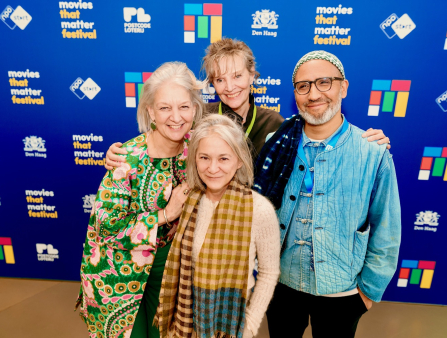
(L to R) Margje de Koning, Mandy Chang, Jolein Laarman, and Khalid Shamis at Movies That Matter, 2026. Photo credit: Jassir Jonis. Courtesy of Movies That Matter
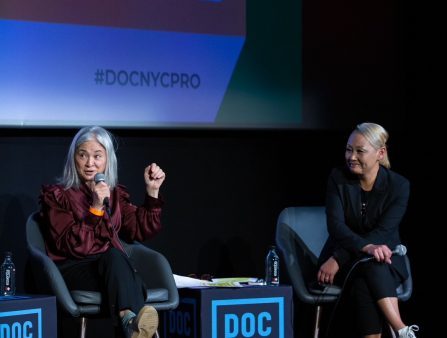
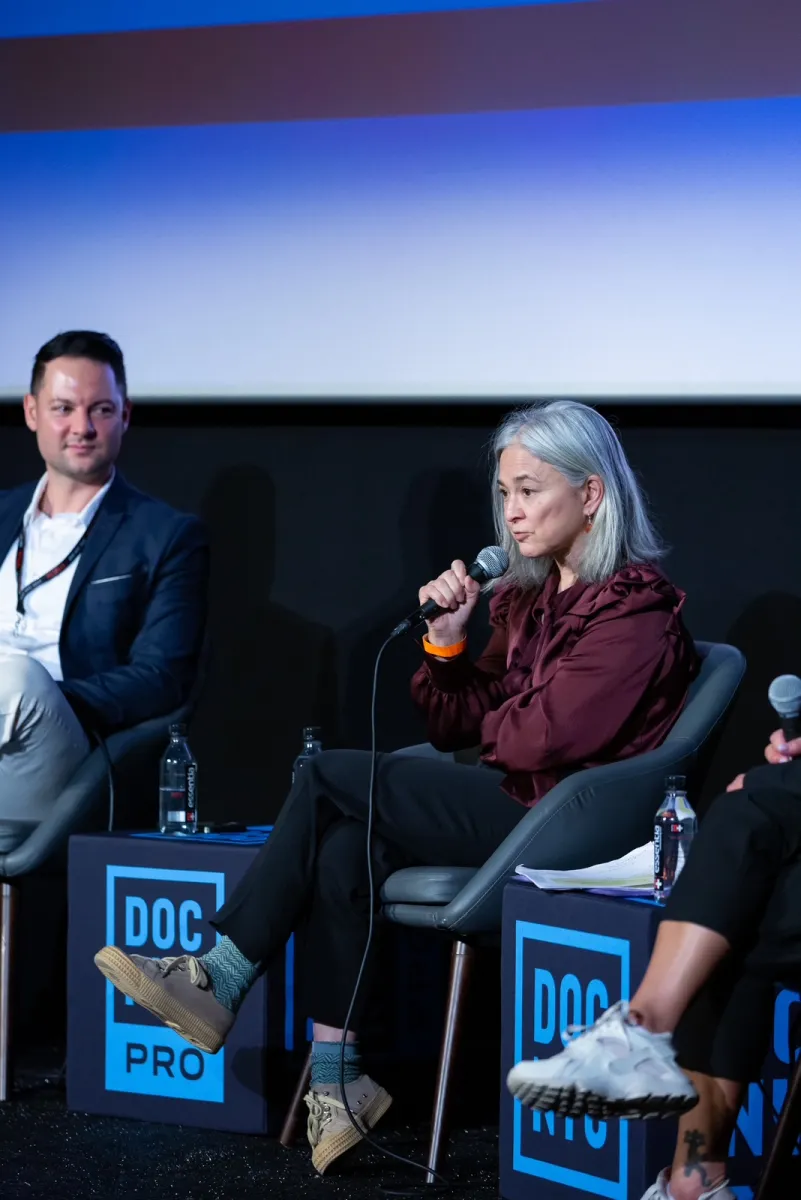
Mandy Chang (L) and Klara Nilsson Grunning (R) at a DOC NYC Pro 2022 panel on international coproductions. Courtesy of Mandy Chang
D: Do you think that job has become harder in recent years, being a commissioning editor at a public broadcaster?
MC: I do. I really feel for a lot of commissioners.
D: It needs allyship from other parts of the industry.
MC: Absolutely. We need to come together because that’s the only way to be strong and fight what isn’t working in our industry. We do that through a show of force—people who believe in the same thing, share the same goals, and want to protect the same things. I want to join forces with organizations supporting independent filmmaking, and I also want to protect all the great things about the broadcasters, because we lose our public service broadcaster at our peril. Once it’s gone, you don’t get it back. There are forces at work that don’t want a strong, independent BBC, for example.
D: That need for documentary allyship needs to go beyond national interest.
MC: Yes, it also means commissioners—those who’ve always worked internally and funded everything themselves—having to collaborate with others and perhaps open their minds to, not compromising exactly, but working together and understanding others from different cultural spaces and backgrounds, and making allowances for that.
D: Touching on your work with Undeniable and navigating the space where filmmakers have to move between commercial and independent work, who do you see the DFC serving? Is there a hard line between commercial or premium content production companies and those working independently in nonfiction film, or is this one ecosystem that needs to work together to survive?
MC: That’s quite a tough question within our field—and we’re trying to work with both TV people and independent filmmakers. There are sectors that need more help than others, that just aren’t as privileged, and I would say those should have a greater priority than the ones that don’t have to work as hard to raise funds, find distribution, and get their films made. Our membership probably reflects that.
D: Thinking much more about the DFC itself and how you’re imagining its role, I was considering that word—council—and how in politics it often has a functional, present-tense purpose: managing and responding to the short term. Stretching that temporally a bit, are there things you look back on from your career that you’d like to see reignited? And are there things you’re coming into this role with a clear vision for going forward?
MC: We have short-term and long-term goals. In the short term, we need to grow our membership. I’m working on going out to all the institutions—whether funders, broadcasters, or others—letting them know who we are and what our goals are. We’re a collective; the members own the organization. It’s not owned by me or the board. Members vote on the board, and they set the agenda.
It starts with listening to what people are saying, what they want, where they see the issues, and how we can help by going out into the field and joining forces with others—including internationally, because there’s a lot to be learned from other organizations, particularly in America, where you have IDA and now the Future Film Coalition, which have more experience at collecting data and lobbying for change. That kind of joined-up collaboration gives you real power. In addition, the more members we have, the more power we have to influence what happens to documentary in this country more broadly.
We’re also involved with a global group of documentary organizations that meet online and at various festivals to talk about shared challenges, share what’s working, support each other when things are tough, and share solutions.
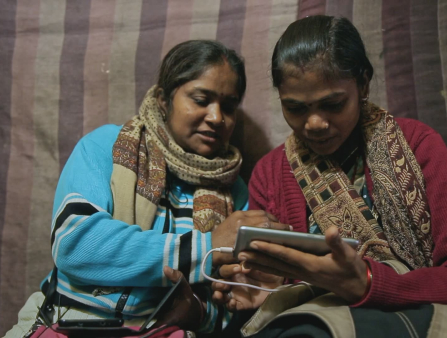
Writing With Fire. Courtesy of Music Box Films
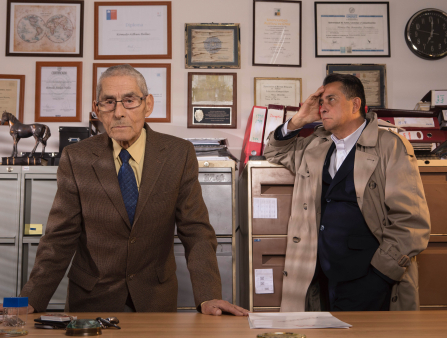
The Mole Agent. Courtesy of Gravitas Ventures
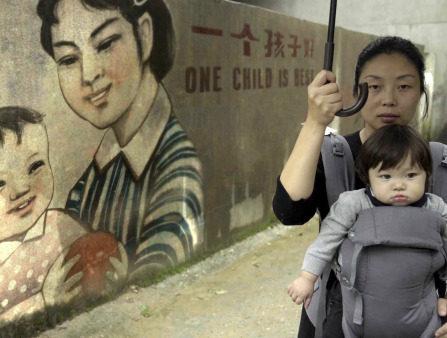
One Child Nation. Courtesy of Amazon Studios
D: That transnational and collective power—I’m thinking about organizations like DISCO, which bring together more grassroots rather than advocacy-based models.
MC: I love the idea of DISCO, and I want to learn from these kinds of initiatives because I think they’re important and filmmakers do value them. That’s how I see the DFC: as an organization that represents anyone and everyone who works in or is part of the documentary field and community. It should be a democratic, open space for new filmmakers, people just entering the industry, and anyone who wants to learn more about documentary, as well as more established people in our field.
D: That idea of being representative of a community echoes the union model—having a representative who advocates and fights the fights, but is collectively informed and collectively moved towards advocacy and decision making. The challenge in the UK, particularly, has been that people can point to problems and may know what the issues are, but translating that into evidence, datasets, strategy, and conversations with those who can actually make change—that’s where things perhaps fall down?
MC: And also building on arguments and positive wins. We’re always having to reinvent the wheel and convince people all over again why documentaries are important. We don’t want to keep doing that. We want to build on the arguments that people have already successfully made. That’s another reason to have an organization like the DFC: to be a repository of useful information and all important data that we can share, and which others can share with us. There isn’t a hidden agenda. We are there to support the field and our members.
D: I wanted to ask: looking ahead, what keeps you in this field of nonfiction and independent nonfiction, and in this particular role as CEO of the DFC? What do you see in the filmmakers within that membership, or more broadly, that makes people stick with it despite the circumstances, despite what the field is like economically?
MC: It’s storytelling. Storytelling is an ancient art form, but it’s also a modern one because of technology. It’s a brilliant form of communication and expression in all its many guises and creative manifestations. It is a cultural and social artifact, both a form that speaks truth to power and an art form. One day, someone will look at the films we have made and learn a great deal about who we were to understand and gain insights into our place in history.
I still have a fire in my belly about this industry. I still get excited about documentaries, and when I see something beautiful, or shocking, or surprising, or moving—something that changes my preconceptions—I still have the same feeling I had when I first discovered this incredible form of storytelling. As long as I have that feeling, I’ll be working in this industry.
This piece was first published in Documentary’s Summer 2026 issue.