
Screen Screen Time is your curated weekly guide to excellent documentaries and nonfiction programs that you can watch at home. There is no rulebook for documentaries, and the form’s beauty derives itself from the infinite creative decisions filmmakers make when trying to artfully capture a narrative. This week’s selection highlights new releases that dont just tell a story, but question and redefine the documentary form as they present poetic visuals that captivate us and draw us in. All of these films have a dreamy filter to them, as they capture the ethereal in reality, however rough that
Latest Posts
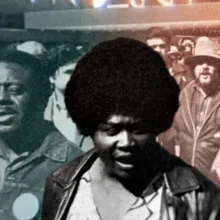
The 11th annual BlackStar Film Festival was back at the University of Pennsylvania’s Penn Live Arts at the Annenberg Center for the Performing Arts with a 76-film lineup representing 27 countries. The hybrid festival showcased many premieres including 16 world, eight North American, 12 East Coast, eight US and 25 Philadelphia premieres. The overall programming featured in-person and online screenings, live performances and events, and panels. BlackStar is known for honing in on Philadelphia’s legacy as a historically Black city and celebrating Black, Brown, and Indigenous filmmakers and
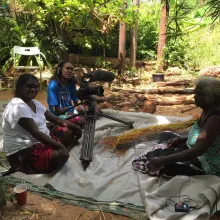
When Yolŋu filmmaker Ishmael Marika first found a 1970s recording of his grandfather speaking to his fathers as a small child, he was overwhelmed. He had never met his grandfather, but the recording couldn’t have come at a better time. Marika’s fathers 1 were heavily involved in leadership decisions for the community at the time, and the discussions had been tense. The fathers were starting to disagree, and tensions had sprung up that threatened to impact the community’s leadership unity. Marika burned a copy of the recording and walked it into the meeting and pressed play. His grandfather's
Dear Readers, As the community-wide conversation has, over the past several years, focused on decolonization, accountability, and ownership, we at Documentary have helped continue that conversation, calling attention to under-reported collectives around the world who are transforming what the documentary form ought to be, and how it ought to be seen and experienced. And so, the Summer 2022 issue decenters what has for so long served as the foci—in practice, in gatekeeping, in engagement—and brings the periphery and circumference to the core. Two ensembles that have taken artistic matters into
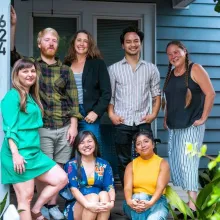
The Art of Building a Road: Working Films' New Organizational Structure and a Future of Shared Power
We’re in a moment in the world, and in the documentary field, where it’s become exceedingly clear that the dominant ways of working are not serving us well, and instead are perpetuating real harm. Current-day societal crises are mirrored in oppressive and extractive practices that have dominated the documentary industry its entire history. At Working Films, we have been asking ourselves honest and reflective questions about leadership and the ways power are held in our organization, including whether or not two white women should lead a documentary impact organization. To ensure that we don’t
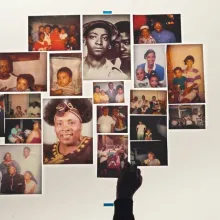
Screen Time is your curated weekly guide to excellent documentaries and nonfiction programs that you can watch at home. Community is a universal necessity often taken for granted. Though lives are heavily influenced by those in close proximity, oftentimes struggles to feel individual. These documentaries are a reminder of the power of community and how interconnected our worlds are. From a New Orleans native and first-time filmmaker Edward Buckle comes Katrina Babies, an intimate look at the children who were affected by Hurricane Katrina. “In America, especially during disasters, Black
During the 2022 Academy Awards season, now overshadowed by the infamous slap, an Indian film became the first documentary from the country to get a nomination. Directed by Rintu Thomas and Sushmit Ghosh, Writing with Fire (2021) focuses on Khabar Lahariya, a rural media outlet run by Dalit women. Dalits are at the bottom of the country's brutal caste system, one of the oldest social hierarchies in the world. The film, which took five years to make, won several international awards, including an Audience Award and a Special Jury Award at the 2021 Sundance Film Festival. Shortly before the Oscar

On a cold Berlin afternoon in February 2022, Nigerian filmmaker Ike Nnaebue presented his debut feature documentary, No U-Turn, to a public audience for the first time. Nnaebue’s strikingly personal documentary, in which he attempts to retrace a journey he embarked on 27 years ago—the tumultuous migrant route from West Africa to southern Europe—premiered in the Panorama section of the Berlinale. No U-Turn, which received a special mention by the Berlinale documentary jury, is part of the Generation Africa project, an ambitious collection of 25 feature-length, medium and short films centered

In December 2020, the Indian government, led by Prime Minister Narendra Modi and the Hindu right-wing Bharatiya Janata Party (BJP) that has held an absolute majority in Parliament since 2014, approved the merger of four hitherto distinct, publicly-funded film units—the National Film Archive of India (NFAI), the Films Division (FD), the Children’s Film Society of India (CFSI), and the Directorate of Film Festivals (DFF)—with the state-owned, for-profit National Film Development Corporation (NFDC). This came into effect on March 30, 2022. Most of the film units were established by independent

“Hawai‘i is the extinction capital and endangered species capitol of the world,” declares Kealoha Pisciotta, a Kānaka Maoli (Native Hawaiian) traditional knowledge-keeper and cultural practitioner, in the 2005 documentary Mauna Kea—Temple Under Siege, “We cannot support de-creation…It is against the law of the universe and creator to eliminate a species.” In 2020, this award-winning documentary by Joan Lander and the late, beloved Puhipau, was added to the National Film Registry by the Library of Congress. They enjoyed a lifelong professional and loving partnership, forming Nā Maka o ka ‘Āina