

Editor’s Note: Since 2003, IDA has been giving its Emerging Filmmaker Award to an individual who, by virtue of their early work, shows extraordinary promise in exploring the possibilities of the nonfiction form. The recipient is selected by the board of directors of IDA, which publishes Documentary. Previous recipients include Shiori Ito, Nanfu Wang, Garrett Bradley, Alex Rivera, and Natalia Almada. This interview was conducted with 2025 awardee Brittany Shyne, whose first documentary feature, the ten-years-in-the-making Seeds, reveals a patient filmmaker grounding long-running histories in portraits of the mundane.
Based in Dayton, Ohio, filmmaker Brittany Shyne is interested in the poetry of everyday moments. Her debut feature film, Seeds (2025), an IDA Enterprise Fund grantee, is a meditative work that follows the lives of several Black farmers who have owned land for over a hundred years in the American South. Filmed over nearly a decade, Shyne’s patient filmmaking allows for an expansive portrait not only of these generational farmers but also their commitment to cultural preservation and community.
Shyne, who received a BFA in motion pictures from Wright State University and an MFA in documentary media from Northwestern University, has always felt an affinity for shining a light on these tender moments that make up a life. Her short films, Ma & Bati (2016), a co-directorial effort centering on the lives of three generations of women in a Pakistani household, and Painted Lady (2013), a fictional narrative that explores the taboos of a girl’s first menstruation, capture the essence of their protagonists with a stunning intimacy.
Along with the films of Charles Burnett, Shyne cites portrait photographers as key influences on her own aesthetic. Among them are P. H. Polk, whose portraits imbued Black Americans with a quiet regality; Jeanne Moutoussamy-Ashe, whose Daufuskie Island series documented the daily life of the South Carolina Sea Island’s residents before it became a tourist destination; and Graciela Iturbide, whose pictures of Indigenous communities in Mexico helped expand the cultural understanding of her country. What’s unmistakable in them all, as in Shyne’s own work, is their approach to documenting the lives of ordinary people with dignity and grace.
Seeds was largely a one-woman show, with Shyne heading down south with her Canon camera and a shotgun mic. In between filming sessions, Shyne found work as a cinematographer on a variety of projects, including Contessa Gayles’s The Debutantes (2024). She also worked closely with Julia Reichert and Steve Bognar on Dave Chappelle: Live in Real Life (2021) and their critically acclaimed documentary, American Factory (2019). The late Reichert saw Shyne’s natural shyness as an advantage, one that allows her to bear witness to intimate moments without disruption.
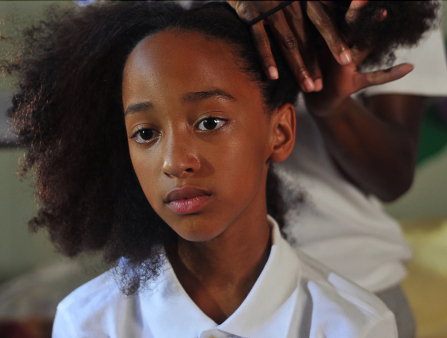
Painted Lady (dir. Brittany Shyne). Image credit: Jacob Ebel. All stills courtesy of Brittany Shyne
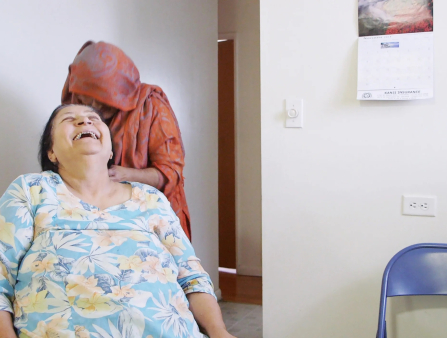
Ma & Bati (dir. Brittany Shyne and Qihui Wu).

The Debutantes (dir. Contessa Gayle).
This skill is evident in Seeds, which largely unfolds in the slow, unhurried pace of rural life. Composed of very patient, long takes, Seeds lets you sit with its moments, almost as if you are there, breathing the same air as these farmers. Her use of natural light and detailed sound design lends a tactile quality to the world, particularly during scenes of harvesting. In one sequence, we follow a farmer as they wash produce, the camera so close to the water that it seems to almost swirl and bubble out of the frame, the light dancing off the edge of the basin; walk the newly washed goods to their truck bed; and then return to start the ritual all over again. It’s in this agrarian world that we meet a handful of Black Centennial farmers, like Carlie Williams and Willie Head Jr., whose families have worked the same farms for more than a hundred years. Theirs is a world built on hard work, community, and stewardship.
Seeds is a film about farming, but also about the preservation of a way of life, one that offers a different idea of freedom. I spoke with Shyne about her own connection to generational farmers, the patience that is needed to follow your subjects for years at a time, and her hopes for cultural continuation. This interview has been edited.
DOCUMENTARY: When did you start thinking you wanted to make documentaries?
BRITTANY SHYNE: I’m compelled to use both fiction and nonfiction techniques. I think they both emerge in very expansive ways. When I started film school, I thought I’d be very focused on narrative fiction filmmaking. That changed once I graduated, when a professor recommended that I go to grad school for documentary filmmaking. At the time, I was planning to go to L.A. and do the hustle and grind. Going to grad school introduced me to a broader range of elements, films, and influences. That gave me a bigger tapestry on which to tell stories.
D: You’ve mentioned Charles Burnett as an influence. His films skirt that docufiction line, especially Killer of Sheep (1978). How did you first find his films?
BS: I watched a lot of his work during grad school. Killer of Sheep was the first film of his that I watched, then My Brother’s Wedding (1983). I like a lot of the filmmakers from the L.A. Rebellion. Their work was so artistically rigorous and formally inventive, while also featuring everyday Black stories on the front page in a way that we hadn’t seen before. There is something remarkable about being in these families’ lives in ways that weren’t hyper-exaggerated; it was just these lovely minute details and these everyday interior moments with these families. That is what struck me.
D: Seeds similarly showcases the rhythm and specificity of everyday rural agrarian life.
BS: It’s a different mode of living. It’s a slower way. Community is such an integral part of this space. Everybody knows each other’s names. One of the books that I was really inspired by was Belonging: A Culture of Place by bell hooks. She writes about how this porch space is a sanctuary space. To me, the farm space was that sanctuary, or communal space, where everybody would come and know each other. I knew that would become a recurring motif throughout my film.
I really wanted to embed myself in the rhythms of the everyday, the habitual, the prolonged, the quiet, the mundane. It’s a very unhurried space. It’s a space of rest. Many of these farmers were at a stage in their lives where things were more precarious and tenuous. We see things slowing down, or even winding down with them. It becomes this duality where the looming question is, who’s going to take over the land once this older generation passes away?
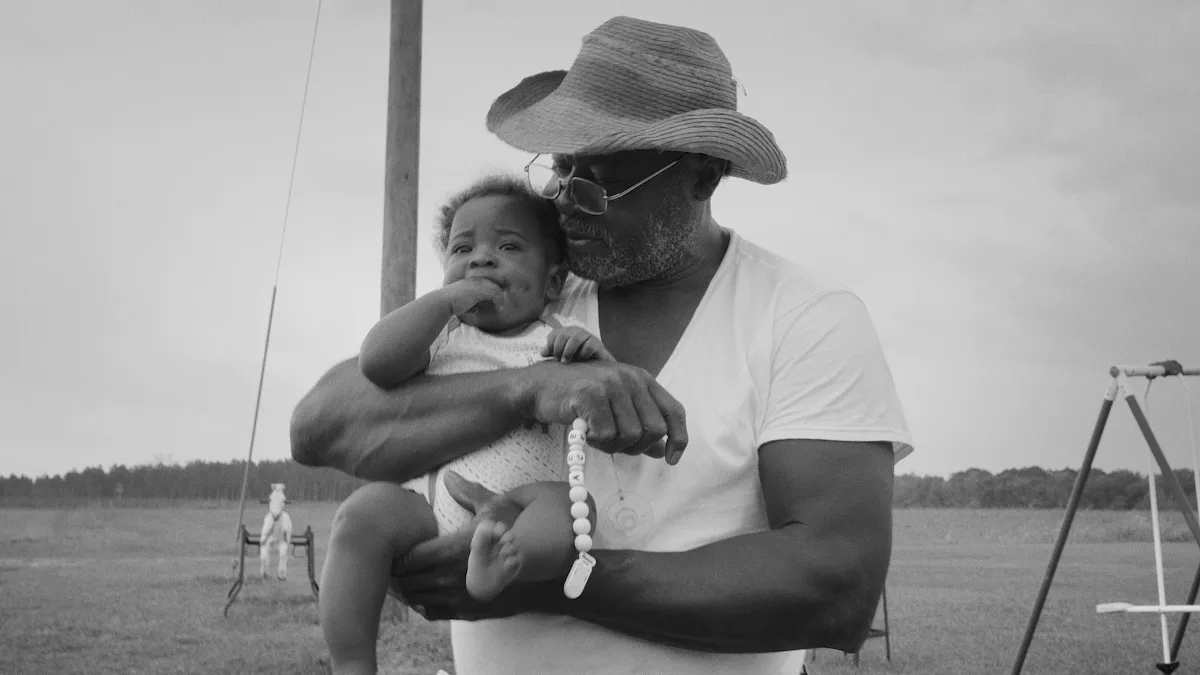
Willie Head Jr. and granddaughter in Seeds.
D: Do you think this film reflects the legacy of the Great Migration and the heritage of those who left and those who stayed in the South?
BS: My great-grandfather owned land in Homer, Louisiana, and my father grew up there until he was four years old. They had cows, watermelons, and cotton fields. This was a place of freedom for him. I wasn’t privy to that knowledge or that habitat, so I was always very intrigued about the farmers who were able to maintain a farm for many generations. There’s something very profound and sacred about that. The film is about maintaining legacy and cultural preservation. That’s why I was drawn to focusing on Centennial farmers, Black farmers who have owned land for over a hundred years. That’s why I started with the Williams family. My mother showed me the article about them. Their ancestor Charles Cokrell purchased 245 acres of land in 1883. I thought, what does that mean to own land for over 142 years?
D: You were a one-woman filmmaking team, both directing, filming, and recording sound. Do you think, within those limitations, you found yourself innovating at all?
BS: It does make you a bit more innovative, but it also gives you a lot more patience. You really have to allow things to unfold. You don’t know what scenes will be revelatory at the time that you’re making them. You have to embrace the unexpected and the unforeseen, the fragmentation and abstractions of everyday life.
It was just me with my Canon camera and a shotgun mic. Sometimes you have technical difficulties. Like that scene in the car with Clara. My mic was going out. There are just a lot of different frustrations that happen. But then there were also a lot of unexpected, beautiful moments that became so prominent within the film. It can be a challenge, but it’s also incredibly rewarding.
D: I think about food capitalism a lot, so I really loved the scene where Willie checks on the corn seeds he's saved in the freezer and talks about the unreasonable cost of GMO seeds, like Roundup Ready, which you have to repurchase every year. Why did you choose to include that scene?
BS: My film isn’t necessarily plot driven. When you’re making a longitudinal project, it’s hard to ascertain the moments that are going to be significant. It’s not until you start shaping the overall tapestry of the film that things start to really unveil themselves. I knew that was a significant moment because it’s here we understand that Willie is trying to preserve his seeds, and how damaging terminator and GMO seeds are to the environment, and how they’ve made it difficult for farmers to keep working. These are the historical legacies of discrimination that have occurred throughout the years.
There are a lot of themes circulating within that moment in the film. I knew that these small moments would become some of the most precious within the larger landscape of the film, because it’s the kind of film where you have to embed yourself in the subtleties of everyday life. I was keen to just be there and understand their stories and the love that they have for their community. But also asking, what does it really entail for this maintenance of legacy to continue?
I wanted to infuse this film with a lot of tenderness, love, and care through these familial acts. If you put the struggles first, then we won’t see the love, and all these other moments that I think are just as enriching and as important. It’s okay to have ambiguity; it’s okay to allow moments to breathe.
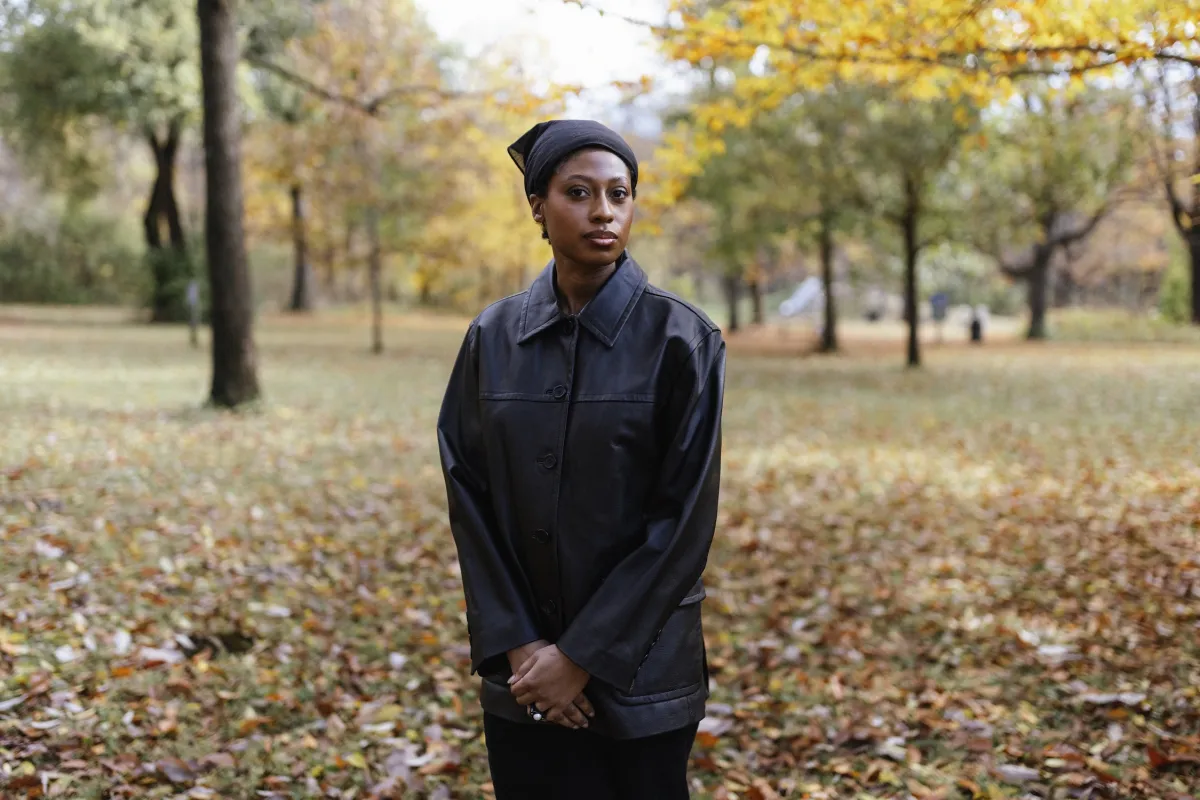
Brittany Shyne
D: Can you talk about the editing process of finding these moments?
BS: I worked with my editor, Malika Zouhali-Worrall, to build this larger framework of stories and the scenes we knew were going to be motifs throughout the film. We knew a car would be a recurring scene. The car becomes a multifunctional space. We come back to the elders in the car. It’s a space of conversation, a space of relaxation, but it’s also a space of practicality. Willie has to go to his neighbors to drop off produce. Or in the beginning, where we see Clara and Ebere talk about what death means. I think this moment in the car becomes so symbolic of the generational knowledge that is transmuted throughout the film.
D: When did you realize you wanted the film to be in black and white? The work that you did with colorist Natacha Ikoli is so meticulous.
BS: I knew from the beginning. The first time I went down there, I knew that there was something very special and profound about this place. I knew there was something archaic here. I wanted to linger in this space. I felt like the remnants of history were so rooted here. I knew that time was going to be a theme within my film: the impermanence of time, the fragility of time, and how mercurial and unforgiving it can be. I felt like black and white would be the perfect artistic choice to allow me to slow it down in a way that was not necessarily nostalgic, but to deeply embed ourselves there.
D: There’s a fluidity to the way you present the history of these farmers that you would only get with a film, rather than still photography. What were your filming methods?
BS: With the older generation, particularly, I was on a tripod a lot. Because theirs was a slower way of life, I wanted to have that languidness within the camera movements. When I started filming with Willie Head Jr., his pace of life was a lot different. He’s always on the go. He’s an activist. So there is a lot more handheld work. It was about merging those two different kinds of visual aesthetics together to capture their own perspectives and within them their own kind of farming space.
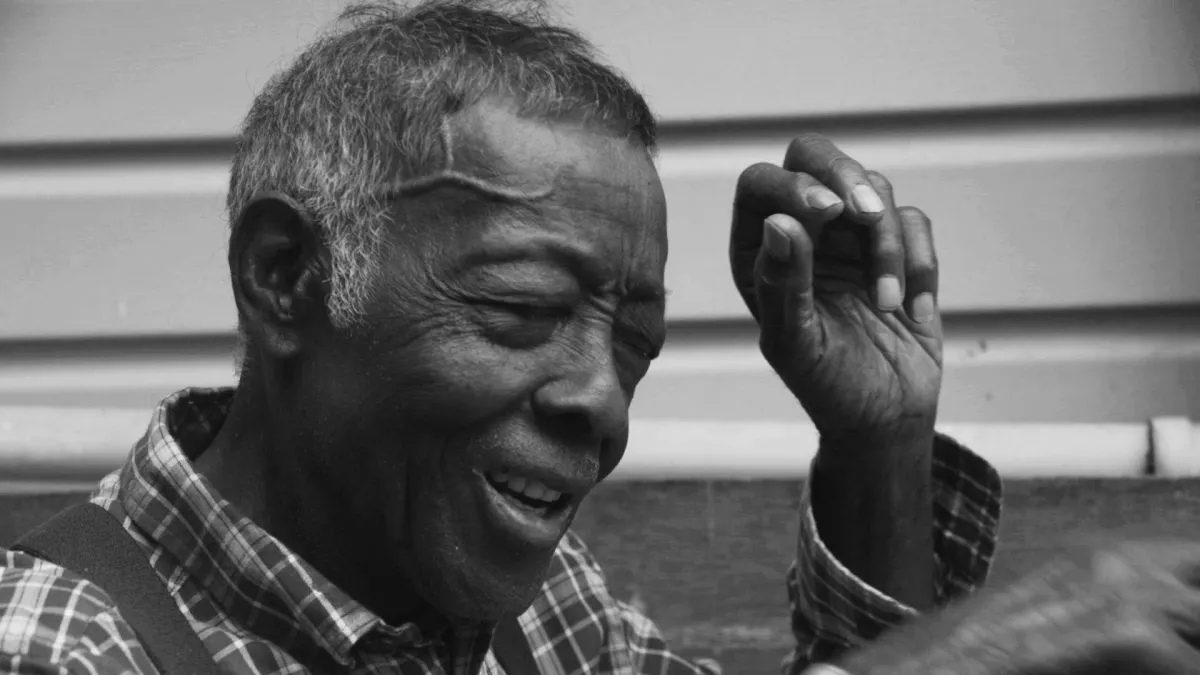
Carlie Williams in Seeds.
D: The film doesn’t use talking heads or any graphics to add context to the lives of Carlie and Willie, but you still managed to imbue the film with a lot of the history of discrimination toward Black farmers.
BS: This film was never going to be didactic. I wanted to be with these people in their everyday lives. That was of the utmost importance to me. When you’re fundraising, people always want more context or more history or more information. People weren’t as open-minded to this kind of nonlinear storytelling. Willie Head Jr.’s storyline is a lot more linear. We see the historical discrimination through these phone calls and through these lives, and the many years that it has been occurring. You can unravel all this historical discrimination if you wait.
I didn’t want to only talk about the plights and adversities of these farmers. I wanted to infuse this film with a lot of tenderness, love, and care through these familial acts. If you put the struggles first, then we won’t see the love, and all these other moments that I think are just as enriching and as important. It’s okay to have ambiguity; it’s okay to allow moments to breathe.
One of the permeating questions throughout the film is, what does it mean when you’re tethered to the environment? What does “home” mean in relation to Black identity? How does one find solace in the place they live in? These families live, work, and sleep on the same land. What does it mean when a community like this perishes? In the film, we begin to ascertain that a farm doesn’t just exist to cultivate life. It also becomes a sanctuary for many of these farmers. And these stewards of the land care about the health and vitality of it. But they also have to be actively safeguarded and protected, too.
D: What do you hope people will take away from watching your film?
BS: One of the reasons I was compelled to do this story is because we have been historically marginalized in the agricultural landscape. Black Americans have been integral to the structural fabric of American society through innovation, ingenuity, and resourcefulness. I wanted to rectify that through this film. Think about the contributions that George Washington Carver made at the Tuskegee Institute and his developments with crop rotation and soil health. He really wanted to make sure Black people were able to obtain autonomy and self-sufficiency. It was important to him that we really understand our ecological environment. I think you can see that with these families. Obviously, that land has economic value, but there’s also a spiritual sustenance and spiritual grounding when you have a place to belong to.
There’s a lot of community care throughout this film. These are the moments that I really hope help people understand that it takes a lot to create this type of ecosystem. We have to find sustainable measures and practices to keep it thriving. We have to have respect and care for the earth to continue and to make sure that Black farmers are able to be prosperous in ways they haven’t been before. Ultimately, the film is about culture preservation, but hopefully it’s also about cultural continuation.
This piece was first published in Documentary’s Winter 2026 issue.